Transparency mode, also called ambient or hear-through, is the feature that lets a sealed headphone or earbud let the outside world back in. Instead of trapping you in silence, it uses the built-in microphones to capture surrounding sound and replay it through the drivers. This guide explains what it does, why it is harder to get right than noise cancellation, and what to look for on a spec sheet.
What transparency mode actually does
When you put on a pair of noise-cancelling headphones, the seal between the ear cushion or eartip and your head blocks a good portion of ambient sound. That is useful on a plane, but it becomes a problem when you need to hear a train announcement, a colleague walking up behind you, or a car approaching while you run. Transparency mode solves that by using the same microphones that feed the ANC system to capture outside sound and play it back through the drivers in real time.
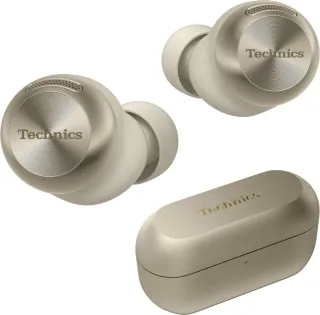
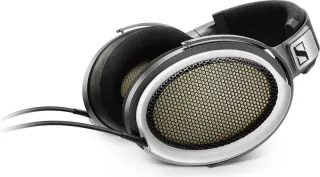
The result is that you can keep the headphones on and still hold a conversation, hear your surroundings, or simply avoid the disorienting feeling of total isolation. The Sony WH-1000XM6, for example, lists a transparency mode alongside its adaptive noise cancellation, and the Sennheiser HDB 630 does the same. The feature is common on both over-ear models and true wireless earbuds such as the Apple AirPods Pro 3 and the Technics EAH-AZ100.
The key point is that transparency mode is not the same as simply removing the headphones. The microphones and DSP add a layer of processing, which means the sound you hear is a reproduction, not the raw acoustic environment. How faithful that reproduction is determines whether the mode feels natural or artificial.
Why good pass-through is hard
Engineers face a tougher problem with transparency mode than with ANC. Noise cancellation only needs to generate an inverted waveform to cancel a predictable hum, which is relatively straightforward. Transparency mode, by contrast, has to capture the full complexity of the outside world—voices, traffic, wind, footsteps—and reproduce it with enough fidelity that your brain accepts it as real. That requires low-latency processing, a wide frequency response, and careful tuning to avoid a hollow, "tunnel" effect.
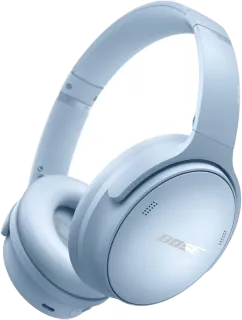
A good pass-through sounds open and natural, as if you are not wearing headphones at all. A poor one sounds hissy, muffled, or slightly delayed, which can be more distracting than the silence it replaces. The difference is not always obvious from a spec sheet. The Bose QuietComfort Headphones (2nd Gen) lists a transparency mode, but published reviews note that its implementation is not as refined as its class-leading ANC. The Alienware Pro Wireless, a gaming headset, also lists the feature, but its focus is clearly on game audio rather than ambient fidelity.
The reason this matters is that a bad transparency mode can make you feel more isolated, not less. If the reproduced sound is tinny or delayed, your brain struggles to locate the source, and you may find yourself turning the mode off and pulling an earcup away instead. That defeats the purpose of the feature.
Adaptive and conversation modes
Many modern headphones go beyond a simple on/off transparency toggle. Adaptive modes adjust the level of ambient sound based on your environment, so the headphones might let in more noise on a quiet street and less in a loud office. Conversation-aware modes detect when someone is speaking to you and automatically lower the music while boosting the pass-through, so you can respond without touching the controls.
The Sony WH-1000XM6 is a good example: it pairs adaptive noise cancellation with a 12-microphone array that supports clear calls and effective transparency. The Apple AirPods Pro 3 also lists adaptive ANC, which implies a similar level of environmental awareness. These features are not universal, so check the spec sheet or published reviews to see whether a model offers manual control, adaptive levels, or both.
One caveat: adaptive modes rely on the same microphones as ANC, and they can be fooled by wind or sudden loud noises. If the headphones misinterpret a gust of wind as speech, you might get a burst of hiss or a sudden increase in ambient volume. That is a known limitation of the technology, not a defect in a specific product.
When it helps and when it does not
Transparency mode is genuinely useful in several situations. At a train station or airport, it lets you hear platform announcements without removing your headphones. In an office, it lets you catch a colleague's question while keeping your music playing. For runners or cyclists, it provides awareness of traffic and pedestrians, which is far safer than total isolation. The Technics EAH-AZ100, with its IPX4 rating and 12-hour battery life, is a plausible choice for outdoor use, though the IPX4 rating only covers sweat and light rain, not immersion.
The feature also fails in predictable ways. Wind is the biggest enemy: gusts create turbulence across the microphone ports, producing a roaring hiss that can overwhelm the pass-through audio. Many headphones have a wind-reduction setting, but it is not always effective. Another failure point is loud environments. If you are in a concert or a construction site, the microphones will pick up the noise and replay it at a level that can be uncomfortable, so you are better off with ANC engaged and transparency off.
Finally, transparency mode is not a substitute for removing the headphones when you need full situational awareness. The reproduced sound is always a step removed from reality, and the delay, however small, can be disorienting in fast-moving situations. Use it as a convenience, not a safety tool.
Reading the spec sheet
On HearWiki, transparency mode appears on the spec sheet as a simple yes or no: the product either lists the feature or it does not. That tells you a feature exists, but it says nothing about how well it works. A headphone with a transparency mode listed at 8.1/10 for ANC might have a pass-through that sounds worse than a model with a lower ANC score, because the two are engineered independently.
Reviewers rate transparency mode separately from ANC for this reason. The Sony WH-1000XM6 has an ANC sub-score of 9.6/10 and a sound score of 9.0/10, but its transparency quality is not captured in either number. The Sennheiser HDB 630 scores 9.4/10 for sound and 8.2/10 for ANC, yet its transparency mode may be better or worse than the Sony's depending on your ears.
When you compare two models, look at the published reviews for specific comments on the pass-through. The Bose QuietComfort Headphones (2nd Gen) and the Alienware Pro Wireless both list the feature, but their target audiences differ, and so does the engineering effort put into the ambient reproduction. For a deeper dive, see our best ANC earbuds list or browse true wireless models with ANC.
FAQ
Does transparency mode use more battery?
Yes, but the impact is usually small. Transparency mode keeps the microphones and DSP active, which adds a minor draw on top of the audio playback. The bigger battery hit comes from ANC, which is why many headphones list separate battery figures for ANC-on and ANC-off. Check the spec sheet for the exact numbers; for example, the Sony WH-1000XM6 lists 40 hours without ANC and 30 hours with it, but does not give a separate transparency-only figure.
Can I use transparency mode with ANC off?
In most cases, yes. Transparency mode is an independent feature that can be toggled on or off regardless of the ANC setting. Some headphones let you cycle through ANC, transparency, and off as three separate modes. However, a few models tie transparency to the ANC circuit, so you may need to have ANC engaged to use it. Check the manual or published reviews for the specific behaviour.
Why does transparency mode sound hissy on some headphones?
The hiss comes from the microphone preamp and the DSP chain. A good implementation applies noise gating and frequency shaping to minimise hiss, while a cheaper one simply amplifies everything the mics pick up, including their own electronic noise. Wind makes it worse, as turbulence across the mic ports creates a broadband roar. There is no spec-sheet number that predicts hiss, so rely on published reviews.
Is transparency mode the same as ambient mode?
Yes. Different brands use different names—ambient mode, hear-through, pass-through, or world mode—but they all describe the same function: replaying outside sound through the drivers. The quality varies, but the concept is identical. When you see any of these terms on a spec sheet, it means the product has the feature. For a comparison of how it works across models, see our ANC earbuds guide.