Two very different over-ear headphones landed in 2025. The Sony WH-1000XM6 is a wireless, noise-cancelling all-rounder; the HiFiMAN Edition Xv is a wired, open-back planar for purists. They cost different amounts, do different jobs, and the right pick depends on how you listen. This head-to-head uses published reviews and recorded specifications only.
Price and positioning
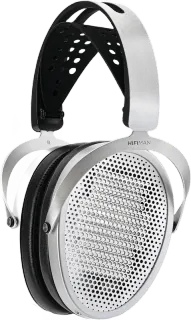
The Sony WH-1000XM6 sells for $398. That buys you a closed-back, wireless headphone with active noise cancelling, Bluetooth 5.3, and support for SBC, AAC, LC3, and LDAC codecs. It weighs 254 g and runs on a 30 mm dynamic driver. The HiFiMAN Edition Xv costs $275, which is $123 less. It is an open-back planar with an 80 mm driver, no Bluetooth, no ANC, and no microphone. It weighs 452 g, nearly twice the Sony. The Edition Xv is aimed at desktop listening with a dedicated amp or a decent dongle; the Sony is built for commutes, flights, and offices. Neither is a niche product, but they occupy different corners of the over-ear market.
The scores, side by side
HearWiki gives the Sony a headline score of 89/100 and the HiFiMAN an 84/100. That is a five-point gap, which is meaningful but not huge. The sub-scores tell a clearer story. The Sony leads on sound (9.0/10 vs 8.6/10), ANC (9.6/10 vs not listed), battery (8.1/10 vs not listed), and calls (9.6/10 vs not listed). The HiFiMAN leads on value (9.2/10 vs 8.2/10). The Sony's ANC and call sub-scores are identical at 9.6/10, and its sound sub-score is only 0.4 points above the HiFiMAN's, which is effectively a tie. The headline scores are not a weighted average of these sub-scores; they reflect overall buyability based on review consensus, price, and availability. You can see the full breakdown on the comparison page.
Sound
Both headphones score well for sound, but they sound very different. The Sony uses a 30 mm dynamic driver in a closed back. Published reviews describe a balanced, detailed tuning with strong bass and clear treble, typical of a premium wireless flagship. The HiFiMAN uses an 80 mm planar magnetic driver in an open back. Reviews highlight a warm, smooth signature with excellent treble extension and a lush bass response, plus a spacious soundstage. The HiFiMAN's midrange can sound veiled or overly warm, and its stiff headband reduces long-term comfort. The Sony is more versatile across genres and easier to wear for hours. If you want a relaxed, non-fatiguing planar experience and don't mind the open-back leakage, the Edition Xv delivers that at a lower price. If you want a do-it-all wireless sound, the Sony wins on convenience and consistency.
Noise cancelling and battery
The Sony has active noise cancelling; the HiFiMAN does not, and its ANC sub-score is not listed. The Sony's ANC is rated 9.6/10, which is excellent. It also has a transparency mode for ambient awareness, multipoint Bluetooth 5.3, and wear detection. The HiFiMAN has none of those features, and its IP rating, multipoint, transparency mode, and wear detection are all not listed. The Sony's battery is rated at 40 hours per charge without ANC and 30 hours with ANC. There is no with-case figure listed for the Sony, and the HiFiMAN has no battery at all because it is wired. The Sony supports LDAC for high-quality wireless audio, but it does not support wireless charging, and it has no water resistance rating. The HiFiMAN has no Bluetooth, so no codecs are listed. If you need silence on a plane or a full day of wireless listening, the Sony is the only option here.
Calls and everyday use
The Sony has 12 microphones and a call sub-score of 9.6/10. Published reviews say it handles calls well in noisy environments. The HiFiMAN has no microphone, and its call sub-score is not listed. It is not a headset. For everyday use, the Sony is lighter (254 g vs 452 g), has physical buttons rather than touch controls, and supports multipoint for switching between two devices. The HiFiMAN has a stiff headband, which reviews say reduces comfort over long sessions. The Sony also has a transparency mode, which helps you hear your surroundings without taking the headphones off. The HiFiMAN is open-back, so you will hear your surroundings anyway, but so will everyone else. If you take calls, travel, or work in a shared space, the Sony is the practical choice. The HiFiMAN is for sitting still and listening.
Which one should you buy?
Buy the Sony WH-1000XM6 if you want a wireless, noise-cancelling over-ear for commuting, flying, or office work. It costs more, but it covers calls, battery, and ANC better than almost anything else. It is also the only one of the two that works without a cable. Buy the HiFiMAN Edition Xv if you have a wired setup, prefer an open-back soundstage, and want a budget-friendly planar. It is easier to drive than many planars, with a low 12-ohm impedance, and its value sub-score of 9.2/10 reflects that. Do not buy it if you need ANC, a microphone, or wireless freedom. For most people, the Sony is the more complete product, but the HiFiMAN is the better deal for a specific kind of listener.
FAQ
Can the HiFiMAN Edition Xv be used with a phone?
Yes, but you will need a wired connection and a headphone jack or a USB-C dongle. Its low impedance (12 ohms) means most phones can drive it to reasonable volume, but it is not designed for portable use, and it has no microphone for calls.
Does the Sony WH-1000XM6 have a transparency mode?
Yes. The Sony has a transparency mode that lets in ambient sound, and it also has wear detection that pauses playback when you take them off. It does not have wireless charging or a water resistance rating.
Which headphone is better for gaming?
The Sony is the only wireless option of the two, but it has no boom mic. The HiFiMAN has no microphone at all, so you would need a separate mic. For competitive gaming, neither is ideal; for single-player immersion, the HiFiMAN's open-back soundstage is a plus. Check our gaming headset guide for dedicated options.
For more context on what to look for in over-ears, see our best over-ear headphones page, or browse all models in the headphone database.