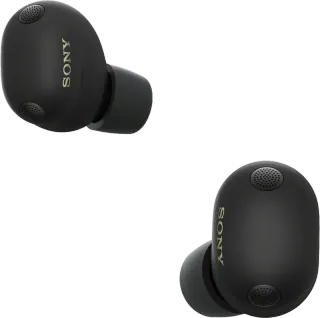
The Sony WF-1000XM6 and Jabra Elite 8 Active Gen 2 are two of the most talked-about true wireless earbuds, but they aim at different buyers. Sony pushes audio fidelity and noise cancelling; Jabra builds for durability and endurance. This head-to-head uses published reviews and recorded specifications to sort out which one deserves your money.
Price and positioning
The Sony WF-1000XM6 costs $278, making it the premium option here. The Jabra Elite 8 Active Gen 2 asks $229, a $49 saving that Jabra hopes you'll spend on its rugged build. Sony positions the XM6 as a flagship all-rounder; Jabra targets gym-goers and outdoor users who need IP68 dust and water resistance. Neither is a budget pick, but the Jabra undercuts the Sony by a meaningful margin.
The scores, side by side
HearWiki's headline buyability score for the Sony is 85/100, against 82/100 for the Jabra. That 3-point gap is real but not dramatic—both sit comfortably in the upper tier of true wireless earbuds. Sub-scores tell a slightly different story: Sony leads on sound (9.3/10 vs 8.1/10), ANC (9.2/10 vs 8.2/10), battery (8.4/10 vs 7.8/10), calls (8.4/10 vs 8.0/10), and value (8.1/10 vs 7.2/10). The sub-scores are category summaries, not a weighted average, so don't read too much into the gaps. The headline score reflects review consensus, price, and availability, not a simple maths exercise.
Sound
Sony's 8.4 mm dynamic driver, paired with LDAC support, delivers a rich, detailed sound that reviewers consistently praise. The Jabra uses a smaller 6 mm driver but also supports LDAC, so it's no slouch. The difference is in refinement: Sony's tuning has more texture and separation, while Jabra's is slightly more neutral but less engaging. If you listen to complex instrumental music or want to pick out every layer of a mix, the Sony is the better choice. The Jabra is fine for pop, podcasts, and workouts, but it doesn't match Sony's resolution.
Noise cancelling and battery
Both earbuds have active noise cancelling (ANC) and transparency modes, so neither gets exclusive credit for those features. Sony's ANC is rated 9.2/10 against Jabra's 8.2/10—a clear but not overwhelming lead. Reviewers describe Sony's adaptive cancellation as more effective at taming low-frequency rumble, while Jabra's is decent but less aggressive.
Battery life is where the two diverge sharply. The Sony offers 12 hours per charge without ANC, dropping to 8 hours with ANC on. Its charging case brings the total to 24 hours. The Jabra lasts 14 hours per charge without ANC, also 8 hours with ANC, but its case extends the total to 56 hours—more than double the Sony's. If you travel or forget to charge, the Jabra's case is a huge practical advantage. Note that the 56-hour figure includes the case; per charge, both are similar when ANC is active.
Calls and everyday use
Call quality is close: Sony scores 8.4/10, Jabra 8.0/10. Sony uses eight microphones, Jabra six, and both support multipoint, so neither gets an edge there. Both have wear detection and wireless charging, so those are also effectively a tie. The real difference is physical. The Sony weighs 6.5 g per earbud and has an IPX4 rating—fine for sweat but not for submersion. The Jabra weighs 10 g, feels bulkier, but carries IP68, meaning it survives dust, mud, and being dropped in water. Jabra's buttons can be stiff, and the case is larger, but for active use, the ruggedness wins. The Sony's case is also somewhat bulky, so neither is pocket-perfect.
Which one should you buy?
If you prioritise sound quality, noise cancelling, and a lighter fit, the Sony WF-1000XM6 is the obvious pick—provided the higher price and shorter battery case don't bother you. If you need something that survives the gym, rain, or a dunk in a river, and you value a case that lasts days, the Jabra Elite 8 Active Gen 2 is the smarter buy. They're not direct competitors in spirit: Sony sells an audiophile experience, Jabra sells endurance. Choose accordingly.
For a full spec-by-spec breakdown, see the comparison table. You can also browse other true wireless options or ANC earbuds if neither fits.
FAQ
Which earbuds have better battery life?
The Jabra Elite 8 Active Gen 2 has a longer total battery life: 56 hours with the charging case, versus 24 hours for the Sony WF-1000XM6. Per charge with ANC on, both last about 8 hours. Without ANC, the Jabra lasts 14 hours per charge, the Sony 12.
Are the Sony WF-1000XM6 worth the extra money?
If you value sound quality and noise cancelling, yes. The Sony scores higher on both, and its LDAC support and lighter design justify the $49 premium for many listeners. If you need ruggedness and longer case battery, the Jabra is better value for your specific use.
Can I use either earbud for swimming?
The Jabra Elite 8 Active Gen 2 has an IP68 rating, so it can handle submersion in water and dust. The Sony WF-1000XM6 is only IPX4, which means sweat and light rain but not swimming. Neither is designed for prolonged underwater use, but the Jabra is far more water-resistant.