Two wired IEMs under $70, both with dual dynamic drivers, but they aim at different listeners. The Truthear x Crinacle Zero Red is a warm, comfortable tuning project from a known collaborator; the Cozoy D2 is a budget dual-driver with swappable plugs. Here is how they compare, using only published specs and review consensus, so you can decide which fits your setup.
Price and positioning
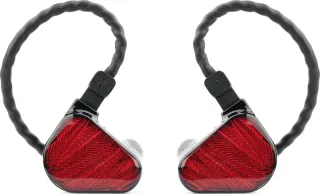
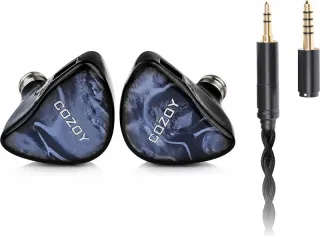
The Truthear Zero Red asks $65. The Cozoy D2 asks $55. That $10 gap is small in absolute terms but meaningful at this price tier. The Zero Red is positioned as a tuning-focused IEM, built around a 10 mm and 7.8 mm dynamic driver pair, with a 17.5 ohm impedance. The D2 uses a 6 mm beryllium driver and a 10 mm graphene-composite driver, with a 20 ohm impedance. Neither is wireless, neither has ANC, and both are strictly wired. The D2 adds a 2-pin 0.78 mm cable with swappable 3.5 mm and 4.4 mm plugs, which is a genuine flexibility advantage if you own a balanced source. The Zero Red has no such option listed. So the price difference is not just about sound tuning; it is also about connectivity flexibility.
The scores, side by side
The HearWiki buyability score for the Zero Red is 82/100. The D2 sits at 81/100. That is a one-point gap, which is effectively a tie. Do not read more into it. These are both well-regarded budget IEMs, and the headline scores reflect that. The sub-scores tell a slightly different story. The Zero Red scores sound at 8.1/10 and value at 8.8/10. The D2 scores sound at 8.5/10 and value at 9.0/10. So the D2 leads on both sub-scores, but by margins that are close. The sound gap is 0.4 points, which is not a lead you should treat as a decisive win. The value gap is 0.2 points, again effectively a tie. Neither product lists sub-scores for ANC, battery, or calls, because neither has those features or publishes those figures. The headline score is not a weighted average of the sub-scores; it is a separate buyability measure based on review consensus and availability.
Sound
Both IEMs use dual dynamic drivers, but the tuning philosophies differ. The Zero Red is described as warm and natural, designed for relaxed, non-fatiguing listening. That is a specific choice: it will not be the most analytical or aggressive sound, but it should be comfortable for long sessions. The D2 is described as detailed, with a dual-driver design that pairs beryllium and graphene-composite diaphragms. That suggests a more energetic or revealing presentation, though beyond "detailed" there is little published description of its tonal character. If you prefer a warmer, laid-back sound, the Zero Red is the safer bet. If you want more detail retrieval and have a balanced source, the D2's 4.4 mm plug may give you a cleaner signal path. But the 0.4-point sound sub-score gap is not large enough to call a winner on sound alone. Both are competent for the price.
Noise cancelling and battery
Neither product has active noise cancellation. Both rely on passive isolation from their fit. The Zero Red is designed for a comfortable fit over extended wear, which helps with passive isolation, but there is no IP rating listed for either. Battery life is not listed for either product because both are wired and draw no power from internal batteries. There is no charging case, no wireless charging, and no battery figure to compare. If you need battery life, these are not the products for you. The D2's low 20 ohm impedance makes it easy to drive from most devices, which is a practical advantage if you use a phone dongle or a laptop. The Zero Red's 17.5 ohm impedance is also low, but it is reported to benefit from a source with enough power, which is a slight caveat.
Calls and everyday use
Neither product lists a microphone count, so call quality is not a documented strength for either. If you need a headset for calls, look elsewhere. For everyday wired listening, the D2's swappable plugs are a real convenience: you can use a 3.5 mm jack on a laptop and switch to 4.4 mm balanced on a dedicated player without buying a new cable. The Zero Red has no such flexibility listed. The Zero Red's shell is described as bulky, which may not suit small ears. The D2's build is described as budget, which may not suit users who want a premium feel. Neither has multipoint, transparency mode, or wear detection, because those are wireless features and these are wired IEMs. If you are comparing these to wireless options, see our best true wireless guide for context, but for wired use, both are straightforward.
Which one should you buy?
If you want a warm, comfortable IEM for long listening sessions and you do not need balanced connectivity, the Truthear x Crinacle Zero Red is the safer pick. It is a known tuning project with a relaxed signature. If you want a more detailed sound and already own a balanced source, the Cozoy D2 offers the swappable 4.4 mm plug and a slightly higher sound sub-score, at a lower price. The $10 saving is small, but the cable flexibility is not. If you are on a tight budget and value versatility, the D2 edges ahead. If you prioritise a comfortable, non-fatiguing fit and do not care about balanced output, the Zero Red is the one. For a full breakdown of every spec, see the comparison table. You might also check our best budget earbuds under $50 if you are stretching the budget further down.
FAQ
Which IEM has better sound: Zero Red or Cozoy D2?
Published sub-scores give the Cozoy D2 a slight edge at 8.5/10 versus 8.1/10 for the Zero Red. That is a 0.4-point gap, which is close. The Zero Red is tuned warmer and more relaxed, while the D2 is described as more detailed, so the better choice depends on your preference.
Can I use these IEMs with a phone?
Yes, both are wired and have low impedance (17.5 ohms for the Zero Red, 20 ohms for the D2), so they should work with most phone dongles or headphone jacks. The D2 includes a 3.5 mm plug and a 4.4 mm balanced plug, which is useful if your phone dongle supports balanced output.
Do either of these IEMs have noise cancelling or a microphone?
Neither has active noise cancelling, and neither lists a microphone count. They rely on passive isolation from the fit. If you need ANC or call quality, these are not the right products. For ANC options, see our best ANC earbuds guide.