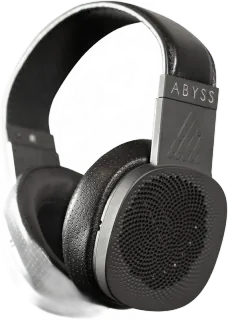
Two planar magnetic over-ears, two very different price tags. The Erzetich Charybdis asks $3,000 for a 115 mm driver and a bold, room-filling design. The Abyss Diana V2 costs $1,684, packs a 63 mm driver into a lightweight frame, and has a reputation for natural, forgiving tone. This head-to-head uses only the recorded specs and published review consensus in the HearWiki database. Neither product has recorded sub-scores for sound, value, or other categories, so the comparison leans on the headline scores, price, and driver specs.
Price and positioning
The price gap is the first thing to notice. The Charybdis is $3,000; the Diana V2 is $1,684. That is a difference of $1,316, which is nearly the cost of another mid-range headphone. The Charybdis positions itself as a statement piece: a large, open-back planar that demands a dedicated desk setup. The Diana V2, by contrast, is marketed as a portable planar, unusually light for its driver size, and easier to live with day to day.
Both are wired, over-ear, open-back designs with no ANC, no Bluetooth, and no battery. Neither records a battery life figure because neither has one. If you want wireless or noise cancelling, neither of these is the right choice; you would be better served looking at the best true wireless or best ANC earbuds lists.
The scores, side by side
The headline HearWiki scores are closer than the price difference might suggest. The Charybdis scores 89/100; the Diana V2 scores 81/100. That is an eight-point gap, which is meaningful but not enormous. In the context of the full database, both sit above average, but the Charybdis clearly benefits from a stronger review consensus and a more favourable price-to-performance ratio at the time of scoring.
Neither product has recorded sub-scores for sound, ANC, battery, calls, or value. That means the headline scores are not broken down into category summaries in the database. You should treat the 89 and 81 as overall buyability indicators, not as a weighted average of the missing sub-scores. The gap is real, but it is not a precise measure of sound quality; it reflects price, availability, and how reviewers received each model.
Sound
Without recorded sub-scores, sound quality has to be inferred from the driver specs and the published summaries. The Charybdis uses a 115 mm planar driver, which is unusually large. Larger planar drivers typically offer lower distortion and more headroom, but they also tend to be heavier and harder to drive. The Diana V2 uses a 63 mm driver, which is still large for a planar, but it is a more conventional size and contributes to the headphone’s lighter weight.
The Diana V2 has a documented character: reviewers describe it as natural, rich, and forgiving, with a well-balanced tonal presentation. It is not a bass cannon or a treble-forward monitor; it aims for neutrality with a warm tilt. The Charybdis does not have a recorded summary in the database, so there is no consensus description to quote. What you can say is that both are planar magnetics, so both will have the characteristic planar traits: fast transients, low distortion, and a generally clean bass response.
If you want a headphone with a known, documented sound signature, the Diana V2 is the safer bet. If you are willing to take a chance on a larger driver and a higher price, the Charybdis offers more raw potential, but the database does not record how it actually sounds.
Noise cancelling and battery
Neither headphone has ANC. Both are open-back, which means they leak sound out and let ambient noise in. That is a design choice for critical listening, not for commuting or office use. If you need isolation, look at the best over-ear list and filter for closed-back models.
Battery life is not recorded for either product because neither has a battery. They are wired headphones, so there is nothing to charge and no wireless operation. The lack of battery is not a flaw; it is a consequence of the design. But it does mean you cannot use either on a plane without a DAC or a phone with a headphone jack.
Calls and everyday use
Call quality is not recorded for either product. Neither has a microphone, as far as the database shows. That is typical for high-end wired planars; they are built for listening, not for calls. If you need a headset for video calls, neither of these is appropriate. You would be better served by a dedicated gaming headset or a pair of best earbuds under $100 with a built-in mic.
Everyday use is where the Diana V2 has a clear advantage. It is compact and lightweight for a planar, which makes it easier to wear for long sessions and easier to store. The Charybdis, with its 115 mm driver, is almost certainly larger and heavier, though the database does not record exact weight. The Diana V2 also has a documented requirement for powerful amplification; it is not easy to drive. The Charybdis likely has a similar need, given its driver size, but that is not recorded.
Which one should you buy?
If you want a portable, natural-sounding planar that you can use with a good desktop amp and occasionally move around the house, the Abyss Diana V2 is the more sensible buy. It costs less, has a documented sound signature, and is easier to live with. The 81/100 score reflects that it is a good headphone, even if it is not a bargain.
If you want a statement piece, have a dedicated listening room, and are prepared to spend $3,000 on a 115 mm planar driver, the Erzetich Charybdis is the more ambitious choice. Its 89/100 score suggests stronger overall reception, but the database does not record why. You are paying a premium for size, rarity, and a more extreme design.
There is no single winner. The Diana V2 is the rational choice for most people; the Charybdis is the emotional choice for those who want the biggest driver and do not mind the price. For a full side-by-side, see the comparison table.
FAQ
Are the Erzetich Charybdis and Abyss Diana V2 easy to drive?
Neither is easy to drive. The Diana V2 is documented as requiring powerful amplification to sound its best. The Charybdis has a much larger driver, so it likely needs even more current, though the database does not record its impedance or sensitivity. Plan on using a dedicated headphone amp with both.
Which headphone has better build quality?
The Diana V2 is praised for its high-quality build and premium materials. The Charybdis does not have a recorded build summary, so there is no direct comparison. Both are premium-priced planars, so you should expect solid construction, but the Diana V2 has the documented edge.
Can I use these headphones for music production or mixing?
Both are open-back planars with a neutral-leaning character, which can work for critical listening. The Diana V2’s natural and balanced tone is often cited as suitable for analytical work. The Charybdis has no recorded sound character, so its suitability is unknown. Neither has ANC, so you will need a quiet room.