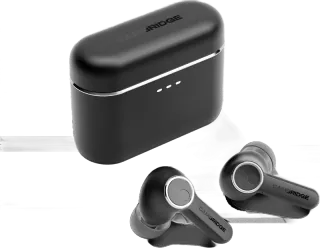
Two true wireless earbuds, two different philosophies. The Cambridge Audio Melomania A100 aim for audiophile-grade codecs and a long battery, while the Sony WF-C710N offer a familiar, feature-rich package at a slightly lower price. Both sit under $100, both have active noise cancelling, and both have real strengths and weaknesses. This head-to-head uses only published specs and review consensus to help you decide which one belongs in your ears.
Price and positioning
The Cambridge Audio Melomania A100 cost $99. The Sony WF-C710N cost $88. That is an $11 gap, which is small enough that price alone should not decide the purchase. Cambridge Audio positions the A100 as a feature-packed alternative to pricier flagships, leaning on LDAC, aptX Lossless, and adaptive ANC. Sony, by contrast, sells the WF-C710N as a mid-range everyday workhorse, with a simpler codec set but a proven app and reliable multipoint. Neither asks for a premium; both are squarely in the budget-to-midrange true wireless bracket. If you are shopping on a strict budget, the Sony saves you a little, but the difference is unlikely to change your life.
The scores, side by side
The HearWiki headline buyability score for the Melomania A100 is 86/100. The Sony WF-C710N scores 82/100. That is a four-point gap, which is meaningful but not enormous. The sub-scores tell a more nuanced story. Cambridge Audio leads on sound (9 vs 8), value (9.6 vs 9.1) and, by a hair, battery (8.5 vs 8.4), while Sony edges ahead on ANC (8.1 vs 7.8). Call quality is closer: 8 vs 7.8. The headline score is not a weighted average of these sub-scores; it reflects overall review consensus, price, and availability. The gap comes mostly from the A100's stronger audio credentials and higher value-for-money perception, not from any single category. If you only look at the headline, the Cambridge Audio looks like the clear winner, but the sub-scores show a tighter race.
Sound
This is where the Melomania A100 pull ahead. They support LDAC, aptX Adaptive, and aptX Lossless, alongside SBC and AAC. That means on compatible Android phones, you get high-resolution wireless audio. The Sony WF-C710N only support SBC and AAC, which is fine for iPhone users but limits Android listeners who want more than standard Bluetooth quality. The Cambridge Audio's 10mm dynamic driver is also larger than the Sony's 5mm driver, and published reviews consistently describe the A100 as more detailed and balanced. The Sony, by contrast, is often criticised for a bass-heavy, smoothed-over tuning out of the box. You can fix that with the Sony app's EQ, but it is extra work. If you value clarity, instrument separation, and codec flexibility, the Cambridge Audio is the better choice. If you are happy with a warm, forgiving sound and do not mind tweaking an EQ, the Sony is acceptable but not outstanding.
Noise cancelling and battery
Sony takes the ANC crown here, but only just. The WF-C710N's ANC is rated 8.1, and while it is effective at reducing constant noise, published reviews note a low rumble that some find annoying. The Melomania A100's adaptive ANC scores 7.8; it adjusts to your surroundings but is less effective in very noisy environments. Neither is class-leading, and both are a step below premium flagships. Battery life is close. The Sony claims 12 hours from the earbuds alone, the Cambridge Audio 11 hours. However, the Cambridge Audio's battery drops significantly with ANC on, to 6.5 hours against the Sony's 8.5. The A100 case supports wireless charging; the Sony spec sheet does not list it. If you need maximum stamina on a long flight, the Sony has a slight edge.
Calls and everyday use
Call quality is nearly identical: 8 for the Cambridge Audio, 7.8 for the Sony. Both handle voice pickup well enough for office calls and outdoor chats, but neither is a dedicated call headset. The Melomania A100 have touch controls that some users find too sensitive; the Sony's touch controls are described as awkward. Multipoint Bluetooth is present on both, so you can switch between a laptop and phone without re-pairing. The Sony has the more mature app with a robust EQ; the Cambridge Audio app offers a custom EQ too, but reviews are less enthusiastic about its usability. For everyday use, the Sony feels more polished, while the Cambridge Audio offers more raw features. Neither is a standout for calls, so choose based on your other priorities.
Which one should you buy?
If you are an Android user who cares about sound quality, codec support, and getting the most for your money, buy the Cambridge Audio Melomania A100. The LDAC and aptX Lossless support, larger driver, and higher sound score make it the better audio investment for the extra $11. If you want a reliable, familiar pair of earbuds for everyday use, with slightly better ANC and battery, and you are happy with AAC or SBC, buy the Sony WF-C710N. The Sony is the safer, more comfortable choice for casual listeners, especially iPhone users who will not benefit from LDAC anyway. For a full spec-by-spec breakdown, see the comparison table. You can also browse our best true wireless and best budget earbuds under $50 guides for more context.
FAQ
Which earbuds have better sound quality, Melomania A100 or Sony WF-C710N?
The Cambridge Audio Melomania A100 sound better, thanks to a larger 10mm driver and support for high-resolution codecs like LDAC and aptX Lossless. The Sony WF-C710N lean bass-heavy and only support SBC and AAC, so they are less detailed out of the box.
Do the Sony WF-C710N have better noise cancelling than the Melomania A100?
Yes, slightly. The Sony WF-C710N score 8.1 for ANC versus 7.8 for the Cambridge Audio, but the Sony's ANC introduces a low rumble that some find distracting. Both are adequate for commuting, but neither is top-tier.
Are the Cambridge Audio Melomania A100 worth the extra $11 over the Sony WF-C710N?
For Android users who value sound quality, yes. The LDAC support and better tuning justify the price. For iPhone users or those who prioritise battery life and a polished app, the Sony WF-C710N is the better value at $88.