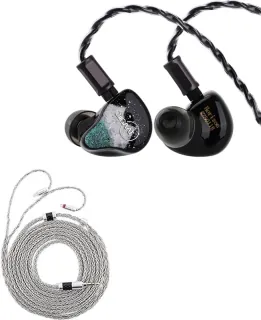
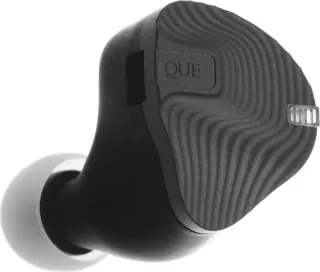
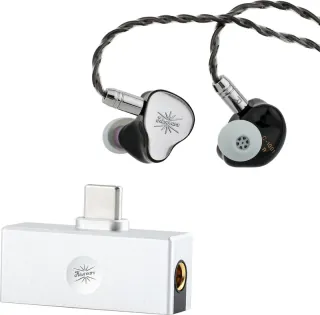
The Ziigaat Horizon and Yu9 Audio Que are two wired IEMs released in 2025 that target the upper mid-range. Both aim for technical performance and engaging tuning, but they go about it differently. This head-to-head compares them on price, scores, sound, and everyday usability, so you can decide which one fits your ears and your playlist.
Price and positioning
The Ziigaat Horizon costs $329, while the Yu9 Audio Que costs $399. That is a $70 gap, which is not trivial. The Horizon asks you to accept a less premium shell and lighter bass in exchange for a very detailed, spacious sound. The Que asks for a bit more money and gives you a more organic midrange, controlled bass, and a vented shell that reduces pressure buildup. Neither is a budget option, but both sit below the usual flagship territory.
If you are comparing them on price alone, the Horizon is easier to justify. But the Que's extra cost buys a more refined tuning and a build that is less likely to feel cheap. The choice comes down to whether you value raw detail or a more natural overall presentation.
The scores, side by side
The HearWiki buyability scores are close. The Horizon scores 83/100, and the Que scores 83/100. That is a one-point difference, which is effectively a tie. The sub-scores tell a similar story: the Horizon gets 8.6/10 for sound and 8.2/10 for value, while the Que gets 8.5/10 for sound and 8.0/10 for value. Again, the gap is small.
Neither product has recorded scores for noise cancelling, battery, or calls, because both are wired IEMs with no active features. Do not read into those nulls as a failing; they simply do not apply to this category. The headline score is a buyability metric based on review consensus, price, and availability, not a weighted average of the sub-scores, so the near-identical numbers reflect that both are well-regarded.
Sound
The Horizon uses a tribrid driver setup: one dynamic driver, two balanced armatures, and two planar drivers. That translates into a W-shaped tuning with strong detail retrieval and a holographic soundstage. Imaging is a standout. However, the treble can be energetic to the point of fatigue for sensitive listeners, and the mid-bass punch is limited. Bass is more about texture than physical impact.
The Que uses a hybrid setup with one dynamic driver and three balanced armatures. Its tuning is more restrained: controlled bass with good punch, organic mids, and airy treble that adds sparkle without harshness. The vented shell helps with pressure, and the spatial cues are impressive for the price.
In direct comparison, the Horizon gives you more raw detail and a wider stage, but it can be demanding. The Que is more forgiving and natural, especially for vocals and acoustic music. If you listen to complex metal or electronic tracks and want to pick apart every layer, the Horizon is the better tool. If you prefer a smooth, cohesive sound that you can wear for hours, the Que has the edge.
Noise cancelling and battery
Neither the Horizon nor the Que has active noise cancelling, and neither has a battery, because both are wired. The Que's vented shell does provide passive pressure relief, which can help with comfort, but it does not block noise actively. The Horizon has no such venting feature recorded.
Battery life is not recorded for either product, so there is nothing to compare there. If you need wireless freedom or ANC, look elsewhere, perhaps at our best true wireless or best ANC earbuds lists. For wired listening, you are relying on your source device for power.
Calls and everyday use
Call quality is not recorded for either IEM, and neither has a microphone or inline controls mentioned in the available data. That makes them poor choices for phone calls. For everyday use, the main differences are fit and cable.
The Que has a wide nozzle, which may cause fit issues for some ears. If you have smaller ear canals, that could be a dealbreaker. The stock cable is also noted as potentially stiff. The Horizon's build quality is described as somewhat cheap for the price, which might affect durability over time.
Neither is ideal for commuting or gym use, given they are wired and lack any wireless features. They are best suited for seated, focused listening at a desk or at home. If you want something for on-the-go use, check our best budget earbuds under $50 or best earbuds under $100 for more practical options.
Which one should you buy?
Buy the Ziigaat Horizon if you prioritise technical ability, detail retrieval, and a large soundstage, and you are willing to accept a less premium build and potentially fatiguing treble. It is the better choice for analytical listening and for genres that reward separation.
Buy the Yu9 Audio Que if you want a more natural, organic sound with controlled bass and a comfortable vented shell, and you do not mind paying $70 more. It is the safer all-rounder for long listening sessions and for listeners who are sensitive to treble.
If you are still torn, the full comparison table at /compare/ziigaat-horizon-vs-yu9-audio-que lays out the specs side by side. You can also browse our best wired IEMs for other options in this price range.
FAQ
Which one has better sound quality, Ziigaat Horizon or Yu9 Audio Que?
It depends on your preference. The Horizon has higher sub-score for sound (8.6 vs 8.5) and offers more detail and a wider soundstage, but its treble can fatigue. The Que is more natural and smoother, with a more organic midrange. Listen to both if you can, but the Que is safer for long sessions.
Are the Ziigaat Horizon and Yu9 Audio Que good for gaming?
Both are wired IEMs with strong imaging, which can help with positional audio. The Horizon's larger soundstage may give a slight edge for competitive games. However, neither has a microphone, so you will need a separate mic for voice chat. Check our best gaming headsets for dedicated options.
Do either of these IEMs have noise cancelling or wireless connectivity?
No. Both are wired IEMs with no active noise cancelling and no Bluetooth. Battery life and call quality are not recorded for either. If you need ANC or wireless, look at our best over-ear or best open-ear lists instead.