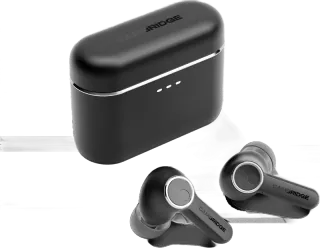
Two true wireless earbuds, both around the $100 mark, both with active noise cancelling, but they go about the job in very different ways. The Cambridge Audio Melomania A100 leans on high-resolution codecs and a long battery life, while the Samsung Galaxy Buds3 FE offers a lighter fit and wear detection. Here is how they stack up, based on published reviews and recorded specifications.
Price and positioning
The Cambridge Audio Melomania A100 cost $99, which puts them just under the $100 line. The Samsung Galaxy Buds3 FE cost $120, so they ask for a $21 premium. Neither is a budget impulse buy, but the Cambridge pair undercut the Samsung pair on price while offering more in several key areas.
Cambridge Audio positions the A100 as a feature-packed daily companion: adaptive ANC, wireless charging, multipoint, and a codec list that includes LDAC and aptX Lossless. Samsung positions the Buds3 FE as a more straightforward option, with a simpler codec set (SBC, AAC, Samsung Scalable) and no multipoint. The price gap is not huge, but the feature gap is.
The scores, side by side
The HearWiki headline scores are 86/100 for the Cambridge Audio Melomania A100 and 82/100 for the Samsung Galaxy Buds3 FE. That is a 4-point gap, which is meaningful but not a landslide. The sub-scores tell a more nuanced story.
On sound, the Cambridge pair scores 9.0/10 against the Samsung's 8.2/10 — a clear but not enormous lead. On ANC, the Samsung actually scores higher: 8.6/10 versus 7.8/10. Battery is where the gap widens: 8.5/10 for Cambridge, 6.3/10 for Samsung. Calls are close, 8.0/10 versus 8.1/10, effectively a tie. Value goes to Cambridge at 9.6/10 against 8.1/10.
So the headline score is not a weighted average of these sub-scores; it is a buyability score based on review consensus, price and availability. The Cambridge pair wins on value and battery; the Samsung pair wins on ANC; calls are a wash.
Sound
If sound quality is your priority, the Cambridge Audio Melomania A100 are the safer bet. They support SBC, AAC, aptX Adaptive, aptX Lossless and LDAC, which means they can handle high-resolution wireless audio from Android phones and some dedicated players. The 10 mm dynamic driver is paired with a 25-ohm impedance, which is a typical figure for true wireless earbuds.
The Samsung Galaxy Buds3 FE use an 11 mm dynamic driver and support only SBC, AAC and Samsung Scalable. That is fine for most listeners, but you will not get the same high-resolution headroom. Reviews generally describe the Samsung pair as having good sound, but the Cambridge pair is rated higher on the sound sub-score, 9.0/10 versus 8.2/10.
If you listen to lossless files or want the option of hi-res wireless, the Cambridge pair is the clear choice. If you mostly stream from Spotify or Apple Music, the Samsung pair will sound perfectly acceptable, but the Cambridge pair still has the edge in detail and clarity.
Noise cancelling and battery
Here is where the two diverge sharply. The Samsung Galaxy Buds3 FE score higher on ANC: 8.6/10 against 7.8/10. That is a real lead. The Samsung pair also has wear detection, which pauses playback when you remove an earbud — a feature the Cambridge pair does not list. The Cambridge pair has transparency mode, and so does the Samsung pair.
Battery life is the opposite story. The Cambridge Audio Melomania A100 offer 11 hours per charge without ANC, dropping to 6.5 hours with ANC enabled. With the charging case, you get 39 hours total (without ANC). The Samsung Galaxy Buds3 FE offer 8.5 hours per charge, 6 hours with ANC, and 24 hours total with the case. So the Cambridge pair gives you roughly 60 percent more total battery life.
The Samsung Galaxy Buds3 FE do not support wireless charging, while the Cambridge pair does. Both have an IP rating: IPX5 for Cambridge, IP54 for Samsung. The Samsung rating covers dust as well as water, so it is slightly more robust in that regard.
Calls and everyday use
The call quality sub-scores are nearly identical: 8.0/10 for Cambridge, 8.1/10 for Samsung. That is effectively a tie. The Cambridge pair has six microphones, the Samsung pair has three, but the published reviews do not suggest a major difference in call clarity.
Where everyday use differs is in connectivity. The Cambridge Audio Melomania A100 support multipoint, so you can connect to two devices at once. The Samsung Galaxy Buds3 FE do not list multipoint at all. If you switch between a phone and a laptop during the day, that is a significant convenience.
The Cambridge pair weighs 9.4 g per earbud, the Samsung pair 5.3 g. The Samsung pair is noticeably lighter, which may be more comfortable for long sessions. The Samsung pair does not list an impedance figure in its specifications.
Which one should you buy?
If you want the best value for money, the Cambridge Audio Melomania A100 are the pick. They cost less, last longer on a charge, support high-resolution codecs, have multipoint and wireless charging, and score higher on the headline HearWiki score. The only areas where the Samsung pair wins are ANC and weight.
If you need stronger noise cancelling and prefer a lighter, more discreet earbud, the Samsung Galaxy Buds3 FE are a reasonable choice, but you are paying more for less battery and fewer features. The 4-point gap in the headline score is not huge, but the gap in value is.
For most people, the Cambridge pair is the smarter buy. For frequent travellers who prioritise ANC above all else, the Samsung pair makes a case for itself, but it is a narrow one.
FAQ
Do the Cambridge Audio Melomania A100 support wireless charging?
Yes, the Cambridge Audio Melomania A100 support wireless charging. The Samsung Galaxy Buds3 FE do not list wireless charging in their specifications.
Which earbuds have better battery life?
The Cambridge Audio Melomania A100 offer 11 hours per charge without ANC and 39 hours total with the case. The Samsung Galaxy Buds3 FE offer 8.5 hours per charge and 24 hours total. The Cambridge pair lasts longer.
Are the Samsung Galaxy Buds3 FE good for calls?
Yes, the Samsung Galaxy Buds3 FE score 8.1/10 for calls, which is effectively tied with the Cambridge Audio Melomania A100 at 8.0/10. Both pairs handle calls well, though the Cambridge pair has more microphones.
For a full breakdown, see the comparison table. You can also read more about the Cambridge Audio Melomania A100 and the Samsung Galaxy Buds3 FE individually. If you are still deciding, browse our best true wireless and best ANC earbuds guides for more context.