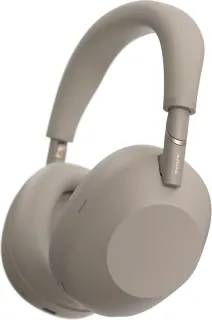
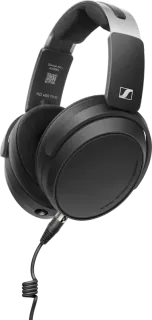
The Sony WH-1000XM6 and Sennheiser HD 480 PRO sit at nearly the same price but serve completely different jobs. One is a wireless, noise-cancelling travel headphone; the other is a wired studio tool. If you are choosing between them, the decision comes down to where and how you listen, not which one is "better" in the abstract.
Both headphones earn strong scores in the HearWiki database, and their price tags are almost identical. But the features, battery life, and intended use cases could not be more different. This head-to-head walks through the numbers and the practical differences so you can pick the one that fits your routine.
Price and positioning
The Sony WH-1000XM6 lists at $398, and the Sennheiser HD 480 PRO at $399. That is a difference of one dollar, so price alone will not separate them. What you get for that money is where the split happens.
The Sony is a flagship consumer wireless headphone. It includes active noise cancellation, Bluetooth 5.3, multipoint, a transparency mode, and wear detection. It is built for commutes, flights, and open-plan offices. The Sennheiser is a wired studio headphone with no battery, no wireless, and no noise cancellation. It is built for mixing, editing, and critical listening at a desk. The Sennheiser's price is notable because it is not a budget studio option; it asks for a premium that you might expect to include more accessories, but the box is minimal.
Neither product is cheap, and neither is a bargain. You are paying for a specific purpose, and the purpose determines whether the price feels fair.
The scores, side by side
The HearWiki headline score for the Sony is 89/100. The Sennheiser scores 86/100. That is a three-point gap, which is meaningful but not huge. Both are well above the average for over-ear headphones, and both are recommended in their categories.
The Sony's sub-scores are sound 9.0/10, ANC 9.6/10, battery 8.1/10, calls 9.6/10, and value 8.2/10. The Sennheiser's sub-scores are sound 8.9/10 and value 8.1/10; its ANC, battery, and calls sub-scores are not listed, because the product has no ANC, no battery, and no microphone array. You cannot compare what does not exist.
The headline scores are not a weighted average of the sub-scores. They reflect published review consensus, price, and availability. The Sony's higher headline score comes largely from its feature set and versatility, not from a massive sound-quality advantage. On sound alone, the two are effectively a tie: 9.0 versus 8.9 is a 0.1-point gap, which is within the margin of noise for any rating system.
Sound
Both headphones use dynamic drivers, but the designs differ. The Sony uses a 30 mm dynamic driver; the Sennheiser uses a 38 mm dynamic driver. The Sennheiser's larger driver and 130-ohm impedance suggest a design aimed at accurate, uncoloured reproduction, which is typical for studio monitoring. The Sony's 48-ohm impedance and consumer tuning are more forgiving across different sources.
Published reviews describe the Sennheiser as clear and detailed, tuned for critical listening. The Sony is described as well-balanced with support for LDAC high-resolution wireless streaming. If you are working on audio, the Sennheiser's neutrality is likely the safer choice. If you are listening for pleasure on the move, the Sony's tuning and codec support give you more flexibility.
Neither is a bass-heavy consumer headphone, and neither is harsh in the treble. The gap between them on sound quality is small. The bigger difference is the source: the Sennheiser is wired only, so it will always receive a full-quality analogue signal. The Sony is wireless, and its sound quality depends on the codec and the source device. With LDAC, the Sony can get close to wired quality, but not everyone has an LDAC-capable phone.
Noise cancelling and battery
The Sony has active noise cancellation; the Sennheiser does not. This is not a close contest. The Sony's ANC sub-score is 9.6/10, which is among the best recorded in the HearWiki database. The Sennheiser has no ANC at all, so there is no sub-score to compare. If you need silence on a plane or in a noisy office, the Sony is the only option here.
The battery situation is equally one-sided. The Sony offers 40 hours per charge without ANC, and 30 hours per charge with ANC enabled. Note that the with-case figure is not listed, because the Sony is an over-ear headphone and does not come with a charging case. The Sennheiser has no battery, so battery hours are not listed for it. You plug it into a headphone amp or interface and it works indefinitely.
For daily use, the Sony's 30 hours with ANC is enough for a week of commutes. The Sennheiser's lack of battery is not a flaw; it is a feature for studio work where you never want a device to die mid-session. But if you want to take your headphones on the go without a cable, the Sony wins outright.
Calls and everyday use
The Sony has a 12-microphone array and a calls sub-score of 9.6/10. The Sennheiser has no microphone count listed and no calls sub-score, because it is not designed for calls. If you take video calls or talk on the phone with your headphones, the Sony is the clear choice. Its transparency mode lets you hear your surroundings without removing the headphones, and its wear detection pauses playback when you take them off.
The Sennheiser has none of those features. It is a wired headphone with no mic, no transparency, and no wear detection. For studio work, that is fine; you are not walking around with them. For everyday use, it is limiting. The Sony also supports multipoint, so you can connect to two devices at once. The Sennheiser has no Bluetooth at all, so multipoint is not listed.
Neither product has an IP rating for water resistance. The Sony's IP rating is listed as none, and the Sennheiser's is not listed. Do not expect either to survive rain or sweat.
Which one should you buy?
If you want one pair of headphones for commuting, travel, calls, and casual listening, buy the Sony WH-1000XM6. Its ANC, battery life, and call quality make it the more versatile product, and its sound is close enough to the Sennheiser that you will not feel you are missing out.
If you are a musician, editor, or audio engineer who works at a desk and needs a reliable, neutral wired headphone, buy the Sennheiser HD 480 PRO. Its sound is tuned for accuracy, its build is sturdy, and its lack of battery and wireless is an advantage in a studio setting.
The two are not really competitors. They are answers to different questions. The Sony asks, "How do I make daily listening more convenient?" The Sennheiser asks, "How do I make critical listening more accurate?" Choose the question that matches your life.
For a full spec comparison, see the comparison table. You can also browse other over-ear headphones or see the best over-ear models for more options in this price range.
FAQ
Can I use the Sennheiser HD 480 PRO with my phone?
Yes, but only over a cable. The Sennheiser ships with a 6.35 mm plug, so you will need a 6.35-to-3.5 mm adapter, and a USB-C dongle on top if your phone has no headphone jack. It has no Bluetooth, so it will not work wirelessly with any device. Its 130-ohm impedance may also require a headphone amp to reach full volume on some phones.
Does the Sony WH-1000XM6 work without noise cancellation?
Yes. You can turn ANC off and use the Sony as a regular wireless headphone. With ANC off, battery life increases to 40 hours per charge, compared to 30 hours with ANC on. The transparency mode also lets you hear outside sounds without removing the headphones.
Which headphone is better for mixing music?
The Sennheiser HD 480 PRO is the better choice for mixing, because its sound is tuned for accuracy and detail, and it has no wireless processing to colour the signal. The Sony is excellent for listening but is not designed for critical studio work. If you are producing audio, the Sennheiser is the safer pick.