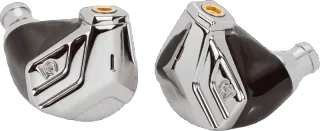
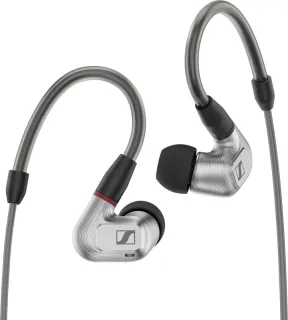
Two flagships, two very different driver technologies, and a $900 price gap. The Campfire Audio Astrolith - Dual Planar IEM uses a dual-planar design to chase speed and detail, while the Sennheiser IE 900 sticks with a single dynamic driver for coherence and natural tone. Both ask for serious money, but they reward different priorities. Here is an honest head-to-head using only the recorded data, with no manufactured winner.
Price and positioning
The Campfire Audio Astrolith costs $2199. That places it firmly in the upper tier of wired in-ear monitors, above most flagship dynamics and into the territory where source quality starts to matter as much as the earphone itself. The Sennheiser IE 900, at $1300, is still expensive, but it sits at a more approachable flagship price point. Neither is a casual purchase, but the Astrolith demands roughly 70% more cash.
What that extra money buys is a dual-planar driver architecture, a near-flat impedance curve, and very low distortion. The IE 900 offers a single TrueResponse dynamic transducer, a more conventional design refined over years. Both are wired-only; the IE 900's Bluetooth 5.x listing refers to the optional cable, not built-in wireless. Neither has ANC, app support, or a battery to speak of.
The scores, side by side
The Astrolith scores 87/100 on HearWiki; the IE 900 scores 84/100. That is a three-point gap, which is real but not dramatic. Both earn a 9/10 for sound, so the difference comes from overall performance weighting rather than a clear sonic knockout. Both also score 6.5/10 for value, which tells you neither is a bargain at its asking price.
Subscores for ANC, battery, and calls are not recorded for either product, because neither offers those features in a meaningful way. If you are shopping for wireless convenience, stop reading now; this is a wired-only conversation.
Sound
On paper, the Astrolith should be the more technically capable earphone. Its dual-planar drivers deliver exceptional speed, low distortion, and a wide, well-defined soundstage with precise imaging. The summary notes a slight mid-bass bloom that can colour certain tracks, and the stock ear tips are poor enough that you should factor in replacement cost. It also needs a quality source or amplifier to show its best, so budget accordingly.
The IE 900 counters with a single-driver coherence that many listeners find more natural. Its timbre is consistent across the range, and imaging is reference-grade. It is less demanding of source gear and more forgiving of imperfect recordings. The trade-off is that it does not resolve micro-detail with quite the same surgical precision as the Astrolith, and it lacks that planar's sheer transient speed.
In practice, the Astrolith rewards analytical listening and well-mastered files; the IE 900 is the safer all-rounder for varied libraries. If you value speed and layering above all, the Astrolith edges ahead. If you want a cohesive, fatigue-free sound that works with everything, the IE 900 is arguably the better daily driver.
Noise cancelling and battery
Neither product has active noise cancelling. The Astrolith's data records ANC as null, and the IE 900 lists it as false; effectively, both rely on passive isolation from a good seal. Battery life is not recorded for either because neither has a battery; they are wired earphones. The IE 900's Bluetooth 5.x spec refers to an optional cable, not a wireless mode with its own power source. If you need ANC or wireless, look at our best ANC earbuds or best true wireless pages instead.
Calls and everyday use
Call quality is not recorded for either product, and that is telling. Neither is designed for calls; they are critical-listening tools, not comms headsets. The IE 900 has a notable cable-noise issue that makes it less pleasant for walking around, though its compact build and lightweight fit are genuinely comfortable. The Astrolith has minor ergonomic quirks and stock tips that need replacing, which adds friction out of the box.
For everyday use, the IE 900 is the more practical of the two: lighter, more comfortable, and less source-dependent. The Astrolith is more of a desk-bound reference tool. If you want a wired IEM for commuting, neither is ideal; consider best budget earbuds under 50 or best earbuds under 100 for that role.
Which one should you buy?
Buy the Campfire Audio Astrolith - Dual Planar IEM if you already own a high-end DAC or amplifier, listen mostly to well-recorded acoustic or electronic music, and want the last word in speed and detail. Its 87/100 score and planar precision justify the $2199 price for that specific listener.
Buy the Sennheiser IE 900 if you want a flagship that works with a phone or laptop, plays any genre without complaint, and offers a natural, coherent sound at a lower price. Its 84/100 score is only three points behind, and its $1300 price leaves room for a decent source upgrade. For most people, the IE 900 is the smarter buy; the Astrolith is for those who know exactly why they need it.
See the full spec-by-spec breakdown on our comparison page, or browse other wired IEMs for alternatives.
FAQ
Which IEM has better sound quality, the Astrolith or the IE 900?
Both score 9/10 for sound, so neither is objectively better. The Astrolith offers faster transients and more micro-detail, while the IE 900 provides a more natural, coherent timbre. Your preference depends on whether you value analytical precision or musical cohesion.
Is the Campfire Audio Astrolith worth the extra money over the Sennheiser IE 900?
The Astrolith costs $2199 versus $1300 for the IE 900, a $899 difference. It scores 87/100 versus 84/100, so the performance gap is small. The Astrolith is worth it only if you have a high-quality source and prioritise technical speed over practicality.
Do the Sennheiser IE 900 or Campfire Audio Astrolith have wireless or noise cancelling?
No. Both are wired earphones with no built-in wireless or active noise cancelling. The IE 900 lists Bluetooth 5.x for an optional cable, but that is not a native wireless mode. Neither has a battery, and call quality is not recorded for either.