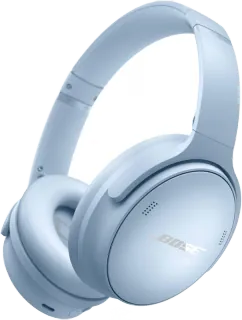
The Audeze Maxwell 2 ANC and the Bose QuietComfort Headphones (2nd Gen) are two very different takes on premium over-ear wireless headphones. One leans into planar magnetic drivers and marathon battery life; the other into featherweight comfort and class-leading noise cancellation. Both are new for 2026, and both ask for a serious chunk of money. Here is how they stack up on the published specs and review consensus, and which one fits your listening habits better.
Price and positioning
The Audeze Maxwell 2 ANC costs $429. The Bose QuietComfort Headphones (2nd Gen) costs $359. That is a $70 gap, which is not trivial, but both sit in the upper tier of wireless over-ears. Audeze is asking you to pay for planar magnetic drivers and a feature list aimed at critical listeners. Bose is asking you to pay for the quietest cabin in its class and a 236-gram frame that you will forget you are wearing. Neither is a budget buy, so the decision comes down to what you value more: soundstage or silence.
The scores, side by side
On the HearWiki buyability scale, the Maxwell 2 ANC scores 88/100, and the Bose scores 86/100. That is a two-point gap, which is effectively a tie in practical terms. Both are strong buys, but they achieve that score through different strengths. The sub-scores tell the story: the Maxwell leads clearly on sound (9.3/10 vs 8.2/10) and calls (9.0/10 vs 6.7/10). The Bose leads on ANC (9.4/10 vs 8.5/10) and value (7.5/10 vs 6.5/10). Battery also goes to the Maxwell, 8.0/10 vs 6.5/10. Remember, the headline score is not a weighted average of those sub-scores; it reflects overall buyability from published reviews, price, and availability. So do not try to reverse-engineer it.
Sound
The Maxwell 2 ANC uses 90 mm planar magnetic drivers, which is a rare and expensive configuration in a wireless headphone. Published reviews consistently praise its clarity, detail retrieval, and low distortion. The Bose uses a 40 mm dynamic driver. It is a competent, balanced sound, and with LDAC support it can handle high-resolution streams, but it does not reach the same level of resolution or separation. If you listen to complex orchestral pieces, jazz, or anything where instrument placement matters, the Maxwell is the obvious choice. The Bose is fine for pop, rock, and podcasts, but you will notice the ceiling when you push it.
Both support multipoint Bluetooth, so neither gets an advantage there. The Maxwell supports SBC, AAC, LC3, LC3plus, and LDAC; the Bose supports AAC and LDAC. If you are an Android user with LDAC, both will serve you well. iPhone users will default to AAC on both.
Noise cancelling and battery
This is where the Bose strikes back. Its ANC sub-score of 9.4/10 is the best in this comparison, and published tests describe it as among the most effective on the market. The Maxwell's 8.5/10 is good, but it is not in the same league. If you fly often, work in open-plan offices, or just want the world to disappear, the Bose is the one. The Maxwell's ANC is adequate for general use, but it lets more low-frequency noise through.
Battery is a different story. The Maxwell delivers 40 hours per charge (35 hours with ANC on). The Bose lists 24 hours per charge, and there is no separate figure for ANC-on operation, so treat 24 hours as the standard figure. Neither has a charging case, because these are over-ears. The Maxwell's battery advantage is substantial: nearly a full day more of listening. If you forget to charge often, that matters.
Neither lists an IP rating, so do not assume either is water or sweat resistant. The Bose has no wireless charging; the Maxwell's wireless charging support is not listed, so treat it as unconfirmed.
Calls and everyday use
The Maxwell has two microphones and a calls sub-score of 9.0/10. The Bose has six microphones but only scores 6.7/10 on calls. That is a surprising gap, but published reviews note that call quality is not the Bose's strongest suit despite the extra mics. The Maxwell is the safer pick for video calls and phone conversations.
On comfort, the Bose wins by a mile. At 236 grams, it is less than half the Maxwell's 560 grams. The Maxwell is heavy, and while the headband and earcups are well-padded, you will feel it after a couple of hours. The Bose is designed for all-day wear and lives up to that claim. Neither has wear detection listed (the Maxwell explicitly lacks it; the Bose's spec is not listed), so neither pauses music when you take them off.
Both have transparency mode, so you can hear your surroundings without removing them. The Bose's implementation is good, and the Maxwell's is serviceable. The Bose also offers an Immersive Audio feature, but published reviews call it underwhelming, so do not buy it for that.
Which one should you buy?
If you are a critical listener who wants the best wireless sound quality money can buy, and you can live with a heavy headphone and a $429 price tag, get the Audeze Maxwell 2 ANC. It also wins on battery life and call quality.
If you prioritise comfort, silence, and a lighter wallet, get the Bose QuietComfort Headphones (2nd Gen). It is the better travel companion and the better all-day office headphone, and its $359 price makes it the better value.
There is no single winner here. The two-point score gap is effectively a tie. Choose based on your priorities, not on which one is "better" in the abstract.
For a full spec-by-spec breakdown, see the comparison table. You can also browse other over-ear options or ANC headphones if you want more context before you commit.
FAQ
Which headphone has better noise cancelling?
The Bose QuietComfort Headphones (2nd Gen) has better noise cancelling. Its ANC sub-score is 9.4/10, compared to 8.5/10 for the Audeze Maxwell 2 ANC. Published reviews consistently rate the Bose as among the best in class for silencing ambient noise.
Which headphone has longer battery life?
The Audeze Maxwell 2 ANC has longer battery life. It offers 40 hours per charge, or 35 hours with ANC on. The Bose QuietComfort Headphones (2nd Gen) offers 24 hours per charge, with no separate ANC-on figure listed.
Are the Audeze Maxwell 2 ANC worth the extra money?
If you value sound quality and call clarity, yes. The Maxwell costs $70 more but scores higher on sound (9.3/10 vs 8.2/10) and calls (9.0/10 vs 6.7/10). However, it is much heavier and has weaker ANC, so the Bose may be the better value for comfort-focused buyers.