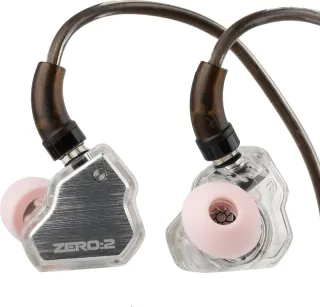
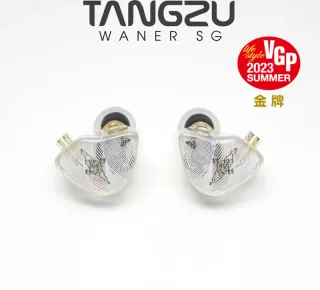
Two budget wired IEMs dominate the under-$30 conversation: the 7Hz x Crinacle Zero: 2 and the Tangzu Waner S.G. Both are single-dynamic-driver earphones with detachable cables and warm tunings, but they ask slightly different things of you. This head-to-head works through price, scores, sound, and the practicalities that matter for everyday listening, and ends with a clear recommendation for each type of buyer.
Price and positioning
The Tangzu Waner S.G costs $19, making it one of the cheapest detachable-cable IEMs you can buy. The 7Hz x Crinacle Zero: 2 asks $25, a 32% premium. For that extra money you get a slightly more refined tuning and a more established name in the budget space, but the Waner is not far behind on value. Both are wired-only, so neither offers Bluetooth, active noise cancellation, or any battery-related features. If you need wireless freedom, look elsewhere; these are strictly for wired listening.
Neither product lists an IP rating, so do not assume any water resistance. The Waner S.G weighs just 4 g per earpiece, which is exceptionally light, while the Zero: 2's weight is not listed. If weight is a concern, the Waner has a clear advantage on paper.
The scores, side by side
The HearWiki headline scores are close: the Zero: 2 sits at 83/100 and the Waner S.G at 82/100. That one-point gap is effectively a tie. Do not read it as a decisive victory for either. The sub-scores tell a similar story. For sound, the Zero: 2 scores 8.1/10 against the Waner's 8.0/10, again a negligible difference. Value is 9.8/10 for the Zero: 2 and 9.5/10 for the Waner, so both are considered excellent for the money.
The Waner S.G has a calls sub-score of 4.5/10, which is worth noting if you plan to use the inline microphone. The Zero: 2 has no calls sub-score listed, so we cannot compare them directly on that front. Neither product has ANC, battery, or transparency sub-scores because neither has those features.
Sound
Both IEMs lean warm and smooth, but they are not identical. The 7Hz x Crinacle Zero: 2 is described as delivering a warm, fun sound with excellent tuning for its price. It is not a technical showcase, but it balances musicality with everyday performance. The Tangzu Waner S.G is similarly warm and easygoing, with a relaxed, music-first character. Its 10 mm dynamic driver punches above its price point, though it is not for those seeking technical detail.
In practice, the Zero: 2 may edge out the Waner on refinement, but the difference is small. If you prefer a slightly more energetic presentation, the Zero: 2's "fun" tuning might suit you. If you want a smoother, more laid-back listen, the Waner's relaxed signature could be the better fit. Neither will disappoint at these prices, and the sound sub-scores reflect that.
Noise cancelling and battery
Neither product has active noise cancellation, and neither has any battery because they are wired. There are no battery hours, no charging case, and no wireless charging to consider. If you need ANC or battery life, these are not the products for you. Passive isolation from the eartips is all you get, which is typical for wired IEMs.
The lack of ANC is not a con at this price; it is simply the nature of the category. Both are passive earphones, so the seal you get from the tips determines how much outside noise is blocked. Choose tips that fit well and you will get decent isolation, but do not expect silence on a noisy commute.
Calls and everyday use
The Waner S.G has a calls sub-score of 4.5/10, which suggests its microphone is mediocre at best. The Zero: 2 has no calls sub-score listed, so we cannot say how it performs. If call quality is a priority, neither is a safe bet; wired IEMs with inline mics are rarely great for calls, and the Waner's score confirms that.
For everyday use, both are lightweight and comfortable, but the Waner's 4 g weight gives it a slight edge for long listening sessions. The Zero: 2's weight is not listed, so we cannot compare directly. Both have detachable cables (the Zero: 2 uses a 0.78 mm two-pin connector), which means you can replace the cable if it fails, a feature that adds longevity.
Neither product lists multipoint, transparency mode, or wear detection, and neither has Bluetooth, so those features are irrelevant here. You are getting a simple, wired experience with no smart features, which is exactly what the price suggests.
Which one should you buy?
Choose the 7Hz x Crinacle Zero: 2 if you want the slightly higher headline score, a marginally more refined sound, and do not mind paying $25. It is the safer all-rounder, with a fun tuning that works across genres and a value sub-score of 9.8/10 that is hard to beat.
Choose the Tangzu Waner S.G if you want to save $6, prefer a lighter earpiece, and value a relaxed, smooth presentation. Its 82/100 score is effectively tied with the Zero: 2, and its 4 g weight makes it one of the most comfortable budget IEMs around. Just be aware that its call quality is below average, and it lacks the Zero: 2's slight edge in refinement.
If you are torn, the difference is small enough that personal preference should decide. Try both if you can; at these prices, buying both is not unreasonable. For a full breakdown of every spec and sub-score, see the comparison table.
FAQ
Are the 7Hz x Crinacle Zero: 2 and Tangzu Waner S.G worth buying in 2026?
Yes, both are still excellent budget IEMs. They cost under $30, have detachable cables, and offer warm, enjoyable sound. The Zero: 2 is slightly more refined, while the Waner is lighter and cheaper, but neither is a bad purchase.
Which has better sound quality, the Zero: 2 or the Waner S.G?
The difference is minimal. The Zero: 2 scores 8.1/10 for sound against the Waner's 8.0/10. The Zero: 2 is described as "fun" while the Waner is "relaxed," so the better choice depends on whether you prefer a more energetic or smoother presentation.
Do these IEMs have active noise cancellation or Bluetooth?
No. Both are wired-only and have no active noise cancellation, battery, or wireless features. They rely on passive isolation from the eartips. If you need ANC or Bluetooth, look at true wireless options instead.