If you have ever shopped for wireless headphones, you have seen codec names like AAC, aptX and LDAC printed on the box. The marketing makes them sound like the difference between a cassette deck and a studio master. The reality is more practical: a codec is just a way of squeezing audio through a Bluetooth link that has far less bandwidth than a cable. This guide explains what each codec actually does, what you can expect from it, and why most of the time you should not be making a buying decision based on codec logos alone.
Bluetooth audio is a compromise. The wireless link has a hard bandwidth limit, so the audio has to be compressed before it is sent, then decompressed by the headphone. Every codec is a different way of doing that compression, with different trade-offs between bitrate, complexity, compatibility and latency. Understanding those trade-offs helps you read a spec sheet without being misled.
What a codec actually does
A codec (short for coder-decoder) converts audio into a compressed digital stream for transmission, then reconstructs it on the receiving side. All Bluetooth codecs used for music are lossy: they discard some audio information to fit within the link's bandwidth. The art is in discarding information the ear is least likely to notice.
SBC, the mandatory baseline codec, uses a simple perceptual model and a fixed set of bitrates. AAC uses a more sophisticated psychoacoustic model, similar to what is used in streaming services. aptX and LDAC use different approaches again, some closer to lossless than others.
The key point is that the codec is only one link in the chain. The source file, the phone's Bluetooth stack, the headphone's DAC and driver all matter too. A great codec cannot fix a poor headphone, and a mediocre codec on a well-tuned headphone can still sound very good.
The codec menu, from SBC to LDAC
SBC: the universal floor
SBC is the only codec that every Bluetooth device must support. It is often dismissed as low quality, but that reputation is not entirely fair. SBC can operate at up to 328 kbps with a reasonable implementation, which is enough for decent quality. The problem is that many phones and headphones use a low-quality SBC profile by default, and some cheap implementations sound genuinely poor.
If both your phone and headphone support a better codec, use it. But if SBC is all you have, it is not a reason to panic. It will sound worse than a wired connection, but not dramatically so on most music.
AAC: the iPhone default
AAC is the codec Apple uses on iPhones and iPads, and it is also supported by most Android phones and many headphones. On Apple devices, AAC is decoded by the headphone's chip, which usually works well. On Android, AAC implementation varies, and some phones encode AAC poorly, resulting in worse quality than SBC.
If you use an iPhone, AAC is your best choice unless your headphone supports LDAC. If you use Android, AAC is a reasonable option but not a guaranteed improvement over SBC.
aptX, aptX HD and aptX Adaptive
aptX is a family of codecs from Qualcomm. The original aptX operates at 352 kbps and is a common feature on Android phones and many headphones. aptX HD doubles the bitrate to 576 kbps and adds a higher resolution mode, but the audible difference is subtle. aptX Adaptive is a newer variant that adjusts bitrate dynamically based on signal strength, ranging from 279 to 420 kbps.
All aptX variants require a Qualcomm chip in both the phone and the headphone. If one side lacks aptX, the connection falls back to SBC or AAC. You can filter the headphone catalog to see which models support it.
LDAC: the high-bitrate option
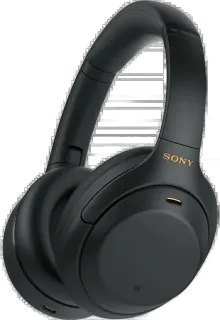
LDAC is Sony's codec, supported on many Android phones and some headphones, including the Sony WH-1000XM4. It operates at three bitrates: 330, 660 and 990 kbps. The highest mode approaches lossless quality, but it is not always what you get.
LDAC negotiates its bitrate based on signal strength and interference. In a busy environment, the phone may drop to 660 or 330 kbps without telling you. Also, some phones and headphones only support the lower modes. So while LDAC can sound excellent, its real-world performance depends on the hardware and the room. You can browse LDAC-supported models in the catalog.
LC3 and Bluetooth LE Audio
LC3 is the codec designed for Bluetooth LE Audio, the next generation of the standard. It offers better quality at lower bitrates than SBC, and it is designed to be more efficient, which should improve battery life. LE Audio also introduces features like broadcast audio and multi-stream support.
LC3 is still rolling out. Newer phones and headphones are starting to support it, but it will take a few years to become universal. When it does, it should replace SBC as the baseline, which is a genuine improvement.
The phone half of the equation
A codec only works if both the phone and the headphone support it. If your phone supports LDAC but your headphone only supports AAC, the connection uses AAC. If your headphone supports aptX but your phone does not, you get SBC or AAC.
This means the codec you can actually use depends on the combination of devices you own. An iPhone user with an aptX-only headphone gets AAC, not aptX. An Android user with a headphone that only supports SBC gets SBC, no matter how good the phone is.
Before you buy a headphone for its codec support, check what your phone supports. The compare tool can help you line up specifications across models.
Latency: the gamer's problem
Codecs also affect latency, the delay between when audio is played and when you hear it. SBC and AAC typically have latency of 100-200 ms, which is fine for music but noticeable in games or video. aptX Low Latency (a variant of aptX) and some gaming-specific modes reduce this to around 40 ms.
If you play fast-paced games or watch a lot of video, latency matters more than quality. A codec with low latency will make the experience more responsive, even if its bitrate is lower. For music, latency is irrelevant.
How much codecs really matter
Here is the honest take: for most listeners, the codec is not the limiting factor. Fit, tuning and ANC matter far more. A well-tuned headphone with SBC will sound better than a poorly tuned one with LDAC. The Sony WH-1000XM4 scores 88/100 in the HearWiki database. Published reviews and its recorded category scores indicate that ANC and tuning matter more to the result than codec support alone.
If you are comparing two similar headphones, codec support can be a tiebreaker. If you are deciding between a headphone with LDAC and one without, and everything else is equal, the LDAC one is likely to sound slightly better on a compatible phone. But do not buy a headphone solely for a codec, and do not assume a codec will transform a mediocre product.
For most people, the best advice is to buy the headphone that fits well, sounds good to you and has the features you need. Codec support is a nice bonus, not a reason to compromise on everything else.
FAQ
What is the best Bluetooth codec for sound quality?
LDAC at 990 kbps is the highest quality codec currently available, but it only works on compatible phones and headphones, and the bitrate often drops in practice. For most listeners, AAC or aptX at standard bitrates is more than good enough.
Does aptX make a big difference compared to SBC?
aptX sounds cleaner than a poor SBC implementation, but the difference is small with good SBC. If you have a decent phone and headphone, the audible gap is not dramatic. The bigger difference is between a well-tuned headphone and a poorly tuned one.
Why does my iPhone not support LDAC?
LDAC is a Sony-developed codec, and Apple has chosen not to license it. iPhones support SBC and AAC, which are the codecs you will get with any Bluetooth headphone. You cannot enable LDAC on an iPhone.
Does Bluetooth LE Audio really sound better?
LC3, the codec used by LE Audio, offers better quality at lower bitrates than SBC, and it is more efficient. Early implementations show promise, but widespread support is still limited. It is a genuine improvement, but not a revolution.