Active noise cancelling (ANC) is the feature most people look for first in a pair of headphones, yet it is also the most misunderstood. This guide explains the technology in plain language, what it can and cannot do, and why the best ANC headphone for you depends on more than the marketing number on the box.
ANC works by using microphones and electronics to create sound that cancels out the noise around you. It is excellent at silencing low-frequency drone from engines, fans, and air conditioning, but it will not remove a colleague's voice or a crying baby. To get the best results, you need a good seal, and you need to know how much you actually need to spend.
How noise cancelling actually works
Every ANC headphone has three parts: a microphone, a processor, and a speaker. The microphone picks up the noise reaching your ear. The processor generates a sound wave that is the exact opposite, or "anti-phase", of that noise. The speaker plays that anti-phase wave, and when it meets the original noise, the two cancel each other out. This is called destructive interference.
There are three ways manufacturers arrange this:
- Feedforward ANC places the microphone on the outside of the earcup or earbud. It hears the noise before it reaches your ear, which gives the processor a head start. The downside is that it cannot correct for noise that leaks in through the seal, and it can struggle with sudden changes in noise.
- Feedback ANC places the microphone inside the earcup, close to your ear. It hears what you actually hear, including noise that has leaked past the seal, and can correct for it. The downside is that it has less time to react, and it can sometimes introduce a slight hiss.
- Hybrid ANC uses both an external and an internal microphone. This is the most common approach in mid-range and premium headphones. It combines the reaction speed of feedforward with the accuracy of feedback, and it is what you will find in most products on our best ANC earbuds list.
The processor is the part that matters most. A fast, well-tuned processor can adapt to changing noise in milliseconds. A cheap one will hum along at a fixed level and may struggle with sudden sounds like a door slam or a passing truck.
What ANC is good at (and what it is not)
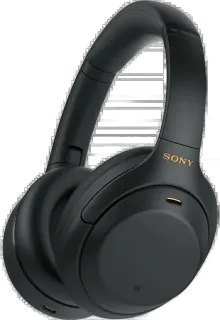
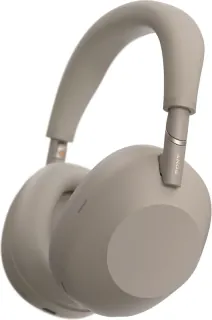
ANC is superb at low-frequency, continuous noise. Think of the rumble of a plane cabin, the hum of a train, the drone of a laptop fan, or the thrum of an air conditioner. These sounds are predictable and steady, which makes them easy for the processor to cancel. The Sony WH-1000XM4 scores 9/10 for ANC, and it is a good example of how well this works in practice.
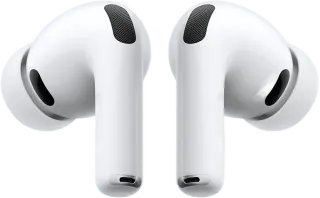
ANC is poor at high-frequency and irregular sounds. Speech, laughter, a baby crying, a dog barking, or a keyboard clatter are all made up of rapid changes in pitch and volume. The processor cannot predict them, and the anti-phase wave is often too slow to keep up. You will notice that voices become muffled and distant, but they do not disappear. The Apple AirPods Pro 3 score 9.5/10 for ANC, and even they will not fully remove a conversation.
There is also a physical limit to how much ANC can do. The anti-phase wave can only cancel noise that reaches your ear through the same path as the speaker. If noise leaks in around the earcup or the eartip, the cancellation is incomplete. This is why passive isolation matters so much.
Fit beats features
The single biggest factor in how well ANC works is the seal between the headphone and your ear. If that seal is broken, the noise leaks in and the ANC cannot cancel it. This is true for both over-ear headphones and earbuds, but it is especially critical for earbuds.
For over-ear headphones, the earcup pads need to fully enclose your ear and press firmly enough to create a seal. Glasses, long hair, or a beard can break that seal. For earbuds, the eartip must fit snugly in your ear canal. A tip that is too small will let noise in; one that is too large will be uncomfortable and may still leak.
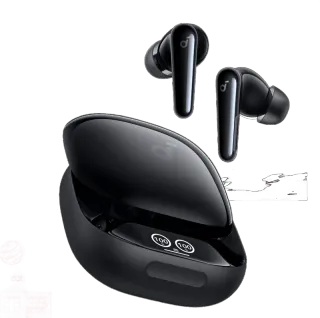
The EarFun Air Pro 4 score 8/10 for ANC, which is strong for a $90 pair. But if you do not get a good seal, they will perform closer to a pair with no ANC at all. The same applies to the Soundcore Liberty 4 Pro, which also score 8/10. Try all the eartip sizes that come in the box, and if the fit is not right, no amount of processing will fix it.
This is why you should never buy ANC headphones without trying them on, or at least without a generous return policy. The marketing number on the box tells you what the processor can do in a lab. It does not tell you how well it will work on your head.
Transparency mode
Transparency mode, also called ambient mode or hear-through, is the reverse of ANC. Instead of cancelling the noise, the microphones pick it up and play it through the speakers, so you can hear what is happening around you. This is useful when you need to hear a train announcement, a colleague, or traffic while walking.
Most modern ANC headphones let you switch between full ANC, transparency, and off. Some, like the AirPods Pro 3, have adaptive transparency that automatically reduces loud sudden noises while still letting you hear conversation. Others, like the Sony WF-1000XM4, offer a quick attention mode where you cup your ear to temporarily let sound in.
Transparency mode is not a substitute for taking your headphones off. The sound it plays is processed and can feel slightly artificial, and it will not reproduce the full spatial accuracy of your natural hearing. But it is a genuine convenience, and it is worth checking how natural it sounds before you buy.
How much you need to spend
ANC quality varies enormously between price tiers. At the budget end, around $50 to $80, you get basic feedforward ANC that will reduce a plane drone but will struggle with anything else. At the mid-range, from $90 to $150, you get hybrid ANC that handles steady noise well and often includes transparency mode. The EarFun Air Pro 4 at $90 and the Soundcore Liberty 4 Pro at $100 are good examples of what this tier can do.
At the premium end, from $200 upwards, you get the best processors, the most effective hybrid systems, and the most natural transparency modes. The Sony WH-1000XM4 at $224 and the Apple AirPods Pro 3 at $250 both score 9/10 or higher for ANC. The AceZone A-Spire at $360 scores 8/10, which shows that a higher price does not always mean better ANC.
If your main use is commuting on a noisy train or flying regularly, the premium tier is worth the money. If you only need to block out an office fan or the hum of a fridge, a $90 pair will do the job. The difference between a 7/10 and a 9/10 ANC score is noticeable, but it is not always worth an extra $150.
You can browse all rated ANC headphones on our ANC-filtered list, and see how the best models compare on our best over-ear and best true wireless pages.
FAQ
Does ANC damage my hearing?
No. ANC plays sound at a safe volume, and it actually lets you listen at lower volumes because you do not need to turn the music up to drown out background noise. The risk to your hearing comes from listening too loud for too long, not from ANC itself.
Can ANC remove all background noise?
No. ANC is very effective at low-frequency, continuous noise like engines and fans, but it cannot fully remove speech, alarms, or other sudden high-frequency sounds. For those, you need good passive isolation as well, which means a tight seal and well-designed earcups or eartips.
Is ANC worth it on budget earbuds?
It depends. Budget ANC earbuds, around $50 to $90, can reduce steady drone noise noticeably, and they are a clear upgrade over no ANC at all. But the effect is weaker than on premium models, and the fit is often less reliable. If ANC is your top priority, it is worth spending a little more.
Why do my ears feel a pressure when I use ANC?
That sensation is common, and it is not caused by air pressure. It comes from your brain interpreting the sudden absence of low-frequency noise as a change in pressure, similar to the feeling you get in a plane cabin. Some people notice it more than others, and it usually fades after a few minutes of use.