
Skip to content
HearWiki

Grado GT220 vs Sony WF-1000XM6: which should you buy?

On aggregated review scores the Sony WF-1000XM6 comes out ahead with a HearWiki score of 85. The full breakdown - sub-scores, specs and what reviewers actually said - is below.
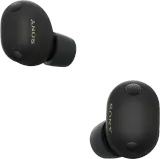
Our pick: Sony WF-1000XM6 - Outstanding overall at around $278.

Score breakdown

Each axis is a 0–10 blend of what reviewers scored, not a lab measurement.

Sony WF-1000XM6 leads on 6 of 7 measures.

  • Grado GT220
  • Sony WF-1000XM6
HearWiki score
60
85
Sound
8.3
9.3
Noise cancelling
0.0
9.2
Battery
6.2
8.4
Calls
6.0
8.4
Value
4.2
8.1
Price (USD)
$260
$280

Generation & platform

The scores rank quality. This is the other question: is the newer one actually newer technology, or the same platform in a new shell?

New platform

Sony WF-1000XM6 (2026) against Grado GT220 (2021). The Sony WF-1000XM6 is the newer platform here: Bluetooth 5.3 against 5.0, Top codec LC3 against aptX, LE Audio (LC3) and ANC type Adaptive against None. It also adds Multipoint pairing, Wear detection, Transparency mode and Custom EQ.

  • GT2202021
  • WF-1000XM620265 yr newer
What differsGT220WF-1000XM6

Platform

Bluetooth
5.0
5.3
Top codec
aptX
LC3
LE Audio (LC3)
No
Yes
ANC type
None
Adaptive

Everyday features

Multipoint pairing
No
Yes
Wear detection
No
Yes
Transparency mode
No
Yes
Custom EQ
No
Yes
Companion app
No
Yes

Level on: Wireless charging, USB-C, Water resistance.

Specifications

GT220WF-1000XM6
Type
True Wireless
True Wireless
Price (USD)
$260
$280
HearWiki score
60
85
Released
2021
2026
Availability
Discontinued
Sold new
Driver
8 mm dynamic
8.4 mm dynamic
Driver type
dynamic
dynamic
Driver size
8 mm
8.4 mm
Drivers per side
1
1
Frequency response
20 Hz - 20 kHz
20 Hz - 40 kHz
Impedance
32 Ω
-
Bluetooth
5.0
5.3
Codecs
SBC, AAC, aptX
SBC, AAC, LC3, LDAC
Multipoint pairing
No
Yes
Wireless range
-
10 m
Battery life
6 h
12 h
Battery life (ANC on)
-
8 h
Battery incl. case
36 h
24 h
Full charge time
120 min
90 min
Quick charge
-
3 min → 1 h
Wireless charging
Yes
Yes
Active noise cancelling
No
Yes
ANC type
none
adaptive
Transparency mode
No
Yes
Companion app
No
Yes
Custom EQ
No
Yes
Wear detection
No
Yes
Controls
touch
touch
Voice assistant
Yes
Google Assistant
Weight
5 g
6.5 g
Case weight
42 g
47.1 g
Water resistance
IPX4
IPX4
USB-C
Yes
Yes
Microphones
2
8
Call noise reduction
-
Yes

What reviewers said

Grado GT220

The Grado GT220 true wireless earbuds prioritize a lively, open sound signature that reflects the brand's audiophile heritage, wrapped in a lightweight and comfortable fit. They offer a solid six-hour battery per charge with a total of 36 hours via the case, support aptX, AAC, and SBC codecs, and include IPX4 splash resistance plus wireless charging. However, their feature set is deliberately minimal—no ANC, transparency mode, app support, or multipoint—making them a niche pick for listeners who value pure sound over modern conveniences.

  • Pro:Engaging, detailed sound with Grado's signature tuning
  • Pro:Lightweight and comfortable for extended listening
  • Pro:Strong battery life with pocketable charging case
  • Con:No active noise cancellation or transparency mode
  • Con:Feature set is basic with no companion app or EQ
  • Con:Premium price for limited extras

Sony WF-1000XM6

The Sony WF-1000XM6 true wireless earbuds deliver a top-tier audio experience with adaptive noise cancellation and a robust feature set, including LDAC support and multipoint connectivity. They perform exceptionally well for music and calls, though their premium price and case size are minor trade-offs. With strong battery life and IPX4 water resistance, they are a versatile, high-performance choice for most listeners.

  • Pro:Excellent adaptive noise cancellation
  • Pro:Rich, detailed sound with LDAC support
  • Pro:Solid battery life and wireless charging case
  • Con:Premium price point
  • Con:Included ear tips may not suit all ear shapes
  • Con:Charging case is somewhat bulky

Summaries are AI-condensed and paraphrased from published reviews and specs - not original hands-on testing. More on our method.

Compare something else

Swap either side out, or start again from the picker.