Wired IEMs
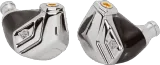
Campfire Audio Astrolith - Dual Planar IEM
81Great
$2,200
Full review dataSpecs, scores and condensed review verdicts for the Campfire Audio Astrolith - Dual Planar IEM vs Softears RS10, side by side. Where a product has no HearWiki score yet, not enough reviews have been aggregated to rate it.
Each axis is a 0–10 blend of what reviewers scored, not a lab measurement.
Campfire Audio Astrolith - Dual Planar IEM leads on 3 of 4 measures.
The scores rank quality. This is the other question: is the newer one actually newer technology, or the same platform in a new shell?
The Campfire Audio Astrolith - Dual Planar IEM is 4 years newer, but it is the same generation of hardware: nothing in the radio, the codecs or the noise cancelling separates them. Nothing separates them on convenience features either, so the choice comes down to tuning and price. For 4 years between them, that is a thin return - treat this as a restyle rather than a new platform.
The Campfire Audio Astrolith is a premium dual-planar IEM that delivers a fast, clear, and highly detailed sound with impressive staging and technical precision. Its nearly flat impedance and very low distortion make it a strong performer, though it benefits from quality sources and has a couple of minor ergonomic quirks. Overall, it's a notable step forward in the brand's planar lineup, offering a cohesive and resolving listen for those seeking top-tier wired performance.
A wired in-ear monitor designed for studio-grade accuracy, this model packs ten balanced-armature drivers into a compact shell. It prioritizes a neutral, transparent sound signature that mirrors what mastering professionals hear, making it a tool for critical listening rather than casual enjoyment. The 25-ohm impedance and standard 0.78mm two-pin connector ensure easy pairing with most sources and aftermarket cables.
Summaries are AI-condensed and paraphrased from published reviews and specs - not original hands-on testing. More on our method.
Swap either side out, or start again from the picker.