Skip to content
HearWiki

Bose QuietComfort 20 vs CrinEar Daybreak: which should you buy?

Specs, scores and condensed review verdicts for the Bose QuietComfort 20 vs CrinEar Daybreak, side by side. Where a product has no HearWiki score yet, not enough reviews have been aggregated to rate it.
Score breakdown

Each axis is a 0–10 blend of what reviewers scored, not a lab measurement.

CrinEar Daybreak leads on 4 of 4 measures.

  • Bose QuietComfort 20
  • CrinEar Daybreak
HearWiki score
-
84
Sound
-
8.8
Value
-
9.2
Price (USD)
$300
$170

Specifications

QuietComfort 20Daybreak
Type
Wired IEMs
Wired IEMs
Price (USD)
$300
$170
HearWiki score
Not scored
84
Released
2013
2025
Availability
Discontinued
Sold new
Driver
dynamic
1DD + 2BA tribrid
Driver type
dynamic
tribrid
Driver configuration
-
1DD + 2BA
Drivers per side
1
3
Frequency response
20 Hz - 20 kHz
-
Impedance
4 Ω
20 Ω
Sensitivity
-
105 dB/mW
Active noise cancelling
Yes
No
Transparency mode
Yes
-
Weight
42.5 g
-
Detachable cable
Yes
-
USB-C
No
-
Microphones
4
-
Microphone type
MEMS
-

What reviewers said

Bose QuietComfort 20

The Bose QuietComfort 20 is a wired in-ear headphone with active noise cancellation, designed to reduce ambient sound for focused listening. It features a lightweight build, a transparency mode for hearing your surroundings, and a detachable cable for convenience. With a dynamic driver and a wide frequency response, it aims to deliver balanced audio in a portable form.

  • Pro:Effective active noise cancellation for a wired in-ear design
  • Pro:Transparency mode allows ambient sound when needed
  • Pro:Lightweight at 42.5g for comfortable extended wear
  • Con:Wired-only connectivity may limit modern device compatibility
  • Con:4-ohm impedance could demand more from some sources
  • Con:No USB-C support for charging or digital audio

CrinEar Daybreak

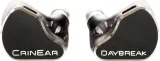
The CrinEar Daybreak is a wired tribrid IEM that delivers a well-balanced, reference-style sound with a focus on accurate reproduction and natural mids. It performs admirably across various genres, though its stock cable and occasionally shouty upper mids may not suit everyone.

  • Pro:Balanced, neutral-leaning tuning
  • Pro:Natural and lifelike midrange
  • Pro:Strong bass texture with sub-bass emphasis
  • Con:Stock cable feels cheap
  • Con:Can sound shouty on certain tracks
  • Con:Not the most exciting or dynamic presentation

Summaries are AI-condensed and paraphrased from published reviews and specs - not original hands-on testing. More on our method.

Compare something else

Swap either side out, or start again from the picker.