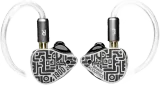
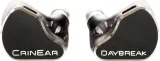
Binary Acoustics 1900 vs CrinEar Daybreak: which should you buy?
On aggregated review scores the CrinEar Daybreak comes out ahead with a HearWiki score of 84. The full breakdown - sub-scores, specs and what reviewers actually said - is below.
Score breakdown
Each axis is a 0–10 blend of what reviewers scored, not a lab measurement.
CrinEar Daybreak leads on 4 of 4 measures.
- Binary Acoustics 1900
- CrinEar Daybreak
Specifications
- Type
- Wired IEMs
- Wired IEMs
- Price (USD)
- $230
- $170
- HearWiki score
- 79
- 84
- Released
- 2026
- 2025
- Availability
- Sold new
- Sold new
- Driver
- 6-driver hybrid
- 1DD + 2BA tribrid
- Driver type
- hybrid
- tribrid
- Driver configuration
- -
- 1DD + 2BA
- Driver size
- 10 mm
- -
- Drivers per side
- 6
- 3
- Frequency response
- 8 Hz - 40 kHz
- -
- Sound signature
- bass-heavy
- -
- Impedance
- 10 Ω
- 20 Ω
- Sensitivity
- 124 dB/mW
- 105 dB/mW
- Active noise cancelling
- -
- No
- Detachable cable
- Yes
- -
- USB-C
- No
- -
- Connector
- 4.4 mm balanced
- -
What reviewers said
Binary Acoustics 1900
The Binary Acoustics 1900 is a six-driver hybrid IEM that delivers a bass-forward yet coherent sound, with punchy lows, natural mids, and smooth treble. Its premium build with stainless steel and resin feels solid, and it offers strong detail retrieval and layering for the price. This is a great pick for listeners who want a musical, engaging tuning with good technical chops around the $230 mark.
- Pro:Musical bass-heavy tuning that remains balanced and coherent
- Pro:Strong resolution and instrument separation for the price
- Pro:Premium build with stainless steel faceplates and resin shell
- Con:Limited sub-bass extension may disappoint hardcore bassheads
- Con:Fixed 4.4 mm balanced cable limits source compatibility without adapters
- Con:10 ohm impedance may be sensitive to output impedance on some devices
CrinEar Daybreak
The CrinEar Daybreak is a wired tribrid IEM that delivers a well-balanced, reference-style sound with a focus on accurate reproduction and natural mids. It performs admirably across various genres, though its stock cable and occasionally shouty upper mids may not suit everyone.
- Pro:Balanced, neutral-leaning tuning
- Pro:Natural and lifelike midrange
- Pro:Strong bass texture with sub-bass emphasis
- Con:Stock cable feels cheap
- Con:Can sound shouty on certain tracks
- Con:Not the most exciting or dynamic presentation
Summaries are AI-condensed and paraphrased from published reviews and specs - not original hands-on testing. More on our method.
Compare something else
Swap either side out, or start again from the picker.
