Skip to content
HearWiki

Audeze Maxwell 2 vs Yamaha HPH-MT8: which should you buy?

Specs, scores and condensed review verdicts for the Audeze Maxwell 2 vs Yamaha HPH-MT8, side by side. Where a product has no HearWiki score yet, not enough reviews have been aggregated to rate it.
Score breakdown

Each axis is a 0–10 blend of what reviewers scored, not a lab measurement.

Audeze Maxwell 2 leads on 5 of 6 measures.

  • Audeze Maxwell 2
  • Yamaha HPH-MT8
HearWiki score
88
-
Sound
9.5
-
Battery
9.5
-
Calls
9.0
-
Value
7.5
-
Price (USD)
$330
$200

Generation & platform

The scores rank quality. This is the other question: is the newer one actually newer technology, or the same platform in a new shell?

Half a step newer

Audeze Maxwell 2 (2026) against Yamaha HPH-MT8 (2019). The Audeze Maxwell 2 edges ahead on platform, but only just: ANC type Adaptive against None.

  • Maxwell 220267 yr newer
  • HPH-MT82019
What differsMaxwell 2HPH-MT8

Platform

ANC type
Adaptive
None

Specifications

Maxwell 2HPH-MT8
Type
Over-Ear
Over-Ear
Price (USD)
$330
$200
HearWiki score
88
Not scored
Released
2026
2019
Availability
Sold new
Discontinued
Driver
90 mm planar magnetic
45 mm dynamic
Driver type
planar
dynamic
Driver size
90 mm
45 mm
Drivers per side
1
1
Frequency response
10 Hz - 50 kHz
15 Hz - 28 kHz
Impedance
-
37 Ω
Sensitivity
-
102 dB/mW
Bluetooth
5.3
-
Codecs
SBC, AAC, LC3, LC3plus, LDAC
-
Multipoint pairing
Yes
-
Battery life
80 h
-
Battery life (ANC on)
35 h
-
Full charge time
120 min
-
Active noise cancelling
Yes
No
ANC type
adaptive
-
Transparency mode
Yes
-
Companion app
Yes
-
Custom EQ
Yes
-
Wear detection
No
-
Controls
buttons
-
Weight
560 g
350 g
USB-C
Yes
-
Connector
-
3.5 mm
Microphones
2
-
Call noise reduction
Yes
-
Call NR technology
AI ENC
-

What reviewers said

Audeze Maxwell 2

No summary yet - we haven't aggregated enough reviews.

Yamaha HPH-MT8

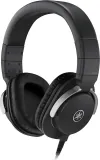
The Yamaha HPH-MT8 is a wired, closed-back studio headphone built for accurate monitoring, featuring a 45mm dynamic driver with a wide frequency range. It comes with both coiled and straight cables, a 6.3mm adapter, and a soft carrying case for portability. Without active noise cancellation, it relies on its over-ear design for passive isolation, making it a solid choice for critical listening in quiet environments.

  • Pro:Accurate, flat sound ideal for studio monitoring
  • Pro:Comfortable over-ear fit with plush padding
  • Pro:Includes both coiled and straight cables plus adapter
  • Con:No active noise cancellation
  • Con:Wired only, limiting mobility
  • Con:Relatively heavy at 350g

Summaries are AI-condensed and paraphrased from published reviews and specs - not original hands-on testing. More on our method.

Compare something else

Swap either side out, or start again from the picker.