Skip to content
HearWiki

Audeze Maxwell 2 vs Beyerdynamic DT 280 MK II: which should you buy?

On aggregated review scores the Audeze Maxwell 2 comes out ahead with a HearWiki score of 88. The full breakdown - sub-scores, specs and what reviewers actually said - is below.
Our pick: Audeze Maxwell 2 - Outstanding overall at around $329.

Score breakdown

Each axis is a 0–10 blend of what reviewers scored, not a lab measurement.

Audeze Maxwell 2 leads on 6 of 6 measures.

  • Audeze Maxwell 2
  • Beyerdynamic DT 280 MK II
HearWiki score
88
57
Sound
9.5
6.0
Battery
9.5
-
Calls
9.0
6.5
Value
7.5
5.5
Price (USD)
$330
$400

Generation & platform

The scores rank quality. This is the other question: is the newer one actually newer technology, or the same platform in a new shell?

Half a step newer

Audeze Maxwell 2 (2026) against Beyerdynamic DT 280 MK II (2019). The Audeze Maxwell 2 edges ahead on platform, but only just: ANC type Adaptive against None.

  • Maxwell 220267 yr newer
  • DT 280 MK II2019
What differsMaxwell 2DT 280 MK II

Platform

ANC type
Adaptive
None

Specifications

Maxwell 2DT 280 MK II
Type
Over-Ear
Over-Ear
Price (USD)
$330
$400
HearWiki score
88
57
Released
2026
2019
Availability
Sold new
Still sold new
Driver
90 mm planar magnetic
dynamic
Driver type
planar
dynamic
Driver size
90 mm
-
Drivers per side
1
1
Frequency response
10 Hz - 50 kHz
-
Impedance
-
80 Ω
Sensitivity
-
100 dB/mW
Bluetooth
5.3
-
Codecs
SBC, AAC, LC3, LC3plus, LDAC
-
Multipoint pairing
Yes
-
Battery life
80 h
-
Battery life (ANC on)
35 h
-
Full charge time
120 min
-
Active noise cancelling
Yes
No
ANC type
adaptive
-
Transparency mode
Yes
-
Companion app
Yes
-
Custom EQ
Yes
-
Wear detection
No
-
Controls
buttons
-
Weight
560 g
170 g
Detachable cable
-
Yes
USB-C
Yes
-
Microphones
2
1
Call noise reduction
Yes
-
Call NR technology
AI ENC
-

What reviewers said

Audeze Maxwell 2

No summary yet - we haven't aggregated enough reviews.

Beyerdynamic DT 280 MK II

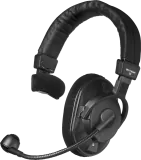
The Beyerdynamic DT 280 MK II is a closed, over-ear broadcast headset designed for professional studio and communication use, offering strong passive isolation and clear voice capture via its pivoting boom mic. It features a detachable cable, replaceable ear cushions, and a single dynamic driver, making it a practical choice for production environments. With an 80-ohm impedance and 100 dB sensitivity, it pairs well with standard broadcast gear, though it lacks active noise cancellation and wireless connectivity.

  • Pro:Closed-back design provides strong passive isolation
  • Pro:Detachable cable and replaceable ear cushions enhance durability
  • Pro:Pivoting boom microphone ensures clear voice pickup
  • Con:No active noise cancellation, relying solely on passive isolation
  • Con:Wired-only connection limits portability
  • Con:Single-ear design may not suit all monitoring tasks

Summaries are AI-condensed and paraphrased from published reviews and specs - not original hands-on testing. More on our method.

Compare something else

Swap either side out, or start again from the picker.