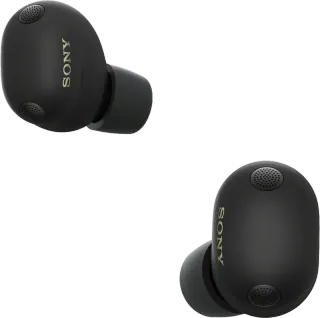
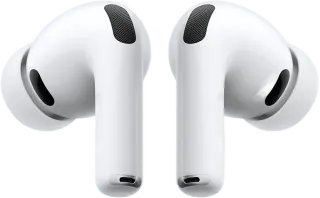
Choosing between the Sony WF-1000XM6 and the Apple AirPods Pro 3 is a classic flagship dilemma. Both are premium true wireless earbuds with excellent noise cancelling, but they take different paths to get there. This head-to-head uses only the data we have recorded to help you decide which one fits your listening habits and ecosystem.
Price and positioning
The Sony WF-1000XM6 costs $298, while the Apple AirPods Pro 3 costs $232. That is a $66 gap, which is not trivial. Sony is asking for a higher premium, partly justified by LDAC support and a longer battery life. Apple’s price is lower, but it assumes you are already inside the Apple ecosystem. Neither is a budget option; both sit at the top of their respective ranges.
Sony positions the WF-1000XM6 as an all-rounder for audiophiles and commuters alike. Apple positions the AirPods Pro 3 as the seamless choice for iPhone owners, with polish and integration taking priority over raw specs. If you are comparing purely on price, Apple wins on entry cost, but you need to weigh what you give up in battery and codec support.
The scores, side by side
On the HearWiki scale, the Sony scores 88/100 and the Apple scores 84/100. That is a 4-point gap, which is meaningful but not huge. Look at the subscores and the picture gets more nuanced. Sony leads on sound (9 vs 8.5), while battery is tied at 8. Apple leads on ANC (9.5 vs 9) and calls (8.5 vs 8). Value is close: Sony gets 7, Apple gets 7.5.
So the headline scores reflect different strengths. Sony has the higher sound subscore. Apple has the higher noise-cancelling and calls subscores, while the battery subscores are equal. Neither dominates the other across the board, so do not treat the 4-point gap as a knockout. For a full breakdown, see the comparison table.
Sound
Sony’s WF-1000XM6 supports SBC, AAC, LDAC, and LC3 codecs. LDAC is the standout, allowing high-resolution wireless audio on Android devices. The sound subscore of 9 reflects a rich, detailed presentation with strong dynamics. Apple’s AirPods Pro 3 only supports SBC and AAC, which is fine for iOS but limits quality on Android. Its sound subscore is 8.5, which is still very good, but it does not have the same ceiling as Sony.
If you are an Android user who cares about audio fidelity, the Sony is the clear choice. If you are on iPhone, AAC is the standard and both will perform similarly in practice. The difference between 8.5 and 9 is not night and day; it is a matter of refinement and codec headroom. For most listeners, the Sony will sound slightly more open and detailed, but the Apple is no slouch.
Noise cancelling and battery
Both earbuds have active noise cancelling. Apple scores 9.5 for ANC, which is the highest subscore in this comparison. Sony scores 9, which is still excellent. In real-world terms, Apple’s ANC is slightly more aggressive at silencing low-frequency rumble, while Sony’s is more adaptive and may be more comfortable for long sessions. Neither will disappoint.
Battery is where the gap widens. Sony records 12 hours with ANC on, while Apple records 8 hours. That is a 50% difference. If you are a frequent traveler or forget to charge, the Sony gives you a full day of listening without reaching for the case. Apple’s 8 hours is still decent, but it is a clear step down. The Sony’s charging case is larger, which is a trade-off, but the extra runtime is worth it for many.
Calls and everyday use
Apple leads on call quality with a subscore of 8.5, thanks to its microphone array and wind reduction. Sony scores 8, which is good but not class-leading. In noisy environments, the AirPods Pro 3 will keep your voice clearer. If you take a lot of calls on the go, that edge matters.
Everyday use also depends on your phone. Apple’s integration with iOS is seamless: quick pairing, automatic switching, and spatial audio that just works. Sony offers multipoint connectivity and a robust app for EQ and controls, but it does not have the same magic with iPhones. On Android, the Sony is the better fit. Both have IP ratings, though Apple’s IP57 is more dust-resistant than Sony’s unspecified rating, which is not recorded in our data.
Which one should you buy?
Buy the Sony WF-1000XM6 if you want the best sound quality, longest battery life, and you use Android. The LDAC support and 12-hour runtime make it the more versatile all-rounder, despite the higher price and bulkier case. It is also the better choice if you value audio fidelity over call clarity.
Buy the Apple AirPods Pro 3 if you are an iPhone user who wants the best noise cancelling and call quality, and you do not mind charging more often. The lower price, superior ANC, and seamless integration make it the smarter pick for Apple loyalists. If you are on the fence, consider your daily routine: long commutes favour Sony, frequent calls favour Apple.
FAQ
Which earbuds have better noise cancelling, Sony or Apple?
Apple’s AirPods Pro 3 scores higher for ANC at 9.5/100, while Sony’s WF-1000XM6 scores 9/100. Both are excellent, but Apple is slightly more effective at silencing low-frequency noise. In practice, you will notice the difference only in very loud environments.
Do the Sony WF-1000XM6 work well with iPhones?
Yes, they work with iPhones via AAC, but you lose LDAC support, which is Android-only. You also miss out on Apple’s seamless integration features like automatic device switching. They still sound good, but you are not getting the full Sony experience.
Are the AirPods Pro 3 worth the price over the Sony?
At $232, the AirPods Pro 3 are cheaper than the $298 Sony, and they offer better ANC and call quality. However, the Sony gives you longer battery life and higher-fidelity sound. It depends on whether you prioritise calls and noise cancelling or battery and audio detail.{