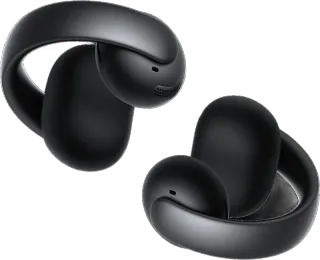
Open-ear headphones have become a staple for runners, cyclists, and anyone who needs to stay aware of their surroundings. Unlike traditional in-ear or over-ear models, they sit outside your ear canal, letting ambient sound in naturally. This guide ranks the highest-scoring open-ear products in the HearWiki database, so you can find a pair that fits your routine without sacrificing safety or comfort.
We've focused on wireless models, as open-ear wired options are rare. Each entry below is ranked by its overall HearWiki score, which weighs sound, battery, calls, and value. Prices are as recorded in our database.
The shortlist
SoundPEATS UU2 (POP Clip2)
Score: 80/100 | Price: $76
The SoundPEATS UU2 (POP Clip2) tops our list with a comfortable, secure clip-on fit and 10 hours of battery per charge (42 with the case). It supports LDAC for high-quality wireless audio, plus Bluetooth 6.0 and multipoint pairing. The sound is balanced for the price, though you may need to adjust the fit to get the best seal. There's no ANC, and Bluetooth can occasionally drop out, but for under $100, this is a strong all-rounder. If you want to compare it with other budget open-ear options, see our best open-ear guide.
Baseus Bass BC1 Open-Ear TWS Earbuds
Score: 79/100 | Price: $33
The Baseus Bass BC1 Open-Ear TWS Earbuds are the budget pick here. At $33, they deliver surprisingly punchy bass for an open-ear design, along with a comfortable, secure fit and 7.5 hours of playback. Physical buttons are less convenient than touch controls, and there's no ANC or transparency mode, but the value is hard to beat. They're a great entry point if you're new to open-ear audio or want a cheap pair for the gym.
SoundPEATS Clip1 Open-Ear Clip-On Earphones
Score: 78/100 | Price: $49
The SoundPEATS Clip1 Open-Ear Clip-On Earphones are lightweight at just 5g per bud, with a 40-hour total battery life when you include the case. They support LDAC and Bluetooth 5.4 with multipoint, making them a feature-packed budget option. Sound is clear and engaging, but the open design offers no isolation, and volume may struggle in noisy environments. Touch controls can also be finicky. Still, for $49, this is a solid choice for all-day wear.
Soundcore AeroFit 2 Pro
Score: 78/100 | Price: $180
The Soundcore AeroFit 2 Pro is a hybrid that can switch from open-ear to a closed in-ear fit, offering flexibility that few rivals match. It supports LDAC and Bluetooth 6.1, with rich, detailed audio. However, the adaptive ANC is inconsistent and less effective than dedicated noise-cancelling earbuds, and the fit can become less stable when you switch modes. At $180, it's premium-priced, but the versatility may justify the cost for some. Compare it with other hybrid options in our earbuds under $100 list, though note this one sits above that budget.
Beyerdynamic Amiron 200
Score: 78/100 | Price: $180
The Beyerdynamic Amiron 200 prioritise comfort and a secure fit, with 11 hours of battery per charge (36 with the case). Sound quality is impressive for open-ear, and the app-based EQ lets you tailor it. However, there's no wear detection, and the touch controls are overly sensitive. At $180, the price-performance ratio is acceptable but not outstanding. They're a good choice if you want a reliable pair for workouts and office use.
Beyerdynamic Amiron Zero
Score: 78/100 | Price: $160
The Beyerdynamic Amiron Zero are lighter than the Amiron 200 at 6g per bud, with Bluetooth 5.4 and multipoint. They offer 6 hours of battery per charge (20 with the case) and a clear, spacious sound. Bass is reduced due to the open design, and there's no ANC or LDAC support, but the comfort and awareness they provide are excellent. At $160, they're a solid mid-range pick.
Baseus Inspire XC1
Score: 77/100 | Price: $107
The Baseus Inspire XC1 feature a hybrid dual-driver setup with LDAC support, delivering surprisingly solid bass for an open-ear design. They're lightweight, comfortable, and IP66-rated for water and dust resistance. The charging case can be slippery, and the companion app has quirks, but at $107, the sound quality is a standout. If you want a durable pair for outdoor use, these are worth a look.
Soundcore AeroClip
Score: 77/100 | Price: $150
The Soundcore AeroClip offer a secure clip-on fit with LDAC support and multipoint Bluetooth 5.4. Battery life is modest at 8 hours per charge, and there's no ANC, but the sound is well-balanced and the fit is comfortable for long wear. At $150, it's a well-rounded everyday option, though not a standout in any single area.
Air conduction vs bone conduction
Open-ear headphones come in two main types: air conduction and bone conduction. Air conduction models, like the ones in this guide, use small drivers that sit near your ear canal and direct sound into it. They tend to offer better audio quality and bass response, and they don't vibrate against your skull.
Bone conduction headphones, by contrast, transmit sound through your cheekbones, bypassing the ear canal entirely. They're ideal for people with hearing aids or ear conditions, and they leave your ears completely open. However, they generally sound thinner and have less bass. If you're choosing between the two, air conduction is better for music quality, while bone conduction suits those who need maximum ear openness.
What open-ear designs give up
Open-ear headphones are a trade-off. The biggest sacrifice is bass: because they don't seal your ear canal, low frequencies lose impact. You'll notice this with electronic music or hip-hop, where the kick drum won't hit as hard.
Isolation is another loss. Open-ear designs let in ambient noise, so they're not ideal for noisy commutes or flights. They also leak sound outward, so people near you may hear your music at higher volumes. If you need noise cancellation, look at our best ANC earbuds list instead.
Finally, battery life can be shorter than in-ear rivals, and features like ANC and wear detection are often missing. That said, for running, cycling, or office work where awareness matters, these compromises are usually worth it.
How we picked
We ranked products using the HearWiki database, which scores each model on sound, battery, calls, and value. We included only wireless open-ear products with recorded prices and scores. The list is in descending order of overall score, rounded to the nearest whole number. We excluded products with missing data and focused on models that are currently available.
For more options, see our full open-ear category or the best open-ear roundup. If you're comparing two models, use our compare tool to see side-by-side specs.
FAQ
Are open-ear headphones good for running?
Yes, they're excellent for running because they let you hear traffic, cyclists, and other hazards. They also stay secure during movement, and most are sweat-resistant. Just be aware that bass is reduced, and you'll hear more wind noise at speed.
Do open-ear headphones leak sound?
Yes, they do. Because they don't seal your ear canal, sound escapes outward. At moderate volumes, people close to you may hear a faint version of your music. At high volumes, the leakage is more noticeable.
Can open-ear headphones work in the office?
They can, especially if you need to hear colleagues or phone calls. However, they won't block out office chatter, and your music may be audible to others. For private listening, consider closed-back or in-ear models instead.