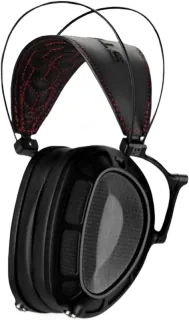
Two flagship over-ear headphones, both scoring 88/100 on HearWiki, but they take very different routes to the top. The STAX SR-009S is an electrostatic open-back that demands a dedicated energiser, while the Dan Clark Audio Stealth is a closed-back planar that needs a powerful amplifier. This head-to-head looks at what each asks of you, where they genuinely differ, and which one fits your listening habits.
Price and positioning
The STAX SR-009S costs $3290, but that is only the start. It is an electrostatic headphone, so you must buy a specialised electrostatic amplifier (energiser) separately. That adds significant cost and complexity to your setup. The Dan Clark Audio Stealth is priced higher at $4499, but it is a conventional planar magnetic headphone, so you can drive it with any high-quality headphone amplifier you already own, provided it has enough power. The Stealth is very power-hungry, though, so you may still need to upgrade your amp to get the best from it. In practice, both require a substantial total investment, but the STAX path is more restrictive because you are locked into electrostatic amplification.
The scores, side by side
On paper, these two are dead level. Both have a HearWiki score of 88/100, with identical subscores: sound at 9.5/10 and value at 6/10. The noise cancelling, battery, and calls subscores are not recorded for either model. So the headline numbers say these are equal performers, and in terms of raw sound quality, that is a fair reflection. The differences are not about one being better than the other; they are about what you value in a listening experience and what your setup can support.
Sound
Both headphones are exceptional at detail retrieval and clarity, which is why they share the same sound subscore. The STAX SR-009S delivers an electrostatic signature: extremely fast, transparent, and open, with a wide soundstage and precise imaging. It is ruthlessly revealing, so it will expose flaws in poorly recorded tracks. The Stealth, being a closed-back planar, offers a different presentation: smoother, more natural, and more intimate. It also retrieves detail very well, but it does not have the same airy openness as the STAX. Bass response on the Stealth is controlled and tight, but it needs ample amplifier power to deliver impact; without it, the low end can sound restrained. The STAX, by contrast, has a lighter, more ethereal bass that some listeners find less physical. There is no clear winner here; it is a matter of taste. If you want the most open, electrostatic speed, the SR-009S is the one. If you prefer a closed-back that sounds natural and refined, the Stealth is stronger.
Noise cancelling and battery
Neither headphone has active noise cancelling. The STAX is an open-back design, so it leaks sound and lets ambient noise in; it is strictly for quiet rooms. The Stealth is closed-back, which provides passive isolation from outside noise, but it does not have any active cancellation circuitry. Battery life is not recorded for either model because both are wired and require an external amplifier; there is no onboard battery. If you need ANC or wireless freedom, neither of these is the right choice.
Calls and everyday use
Call quality is not recorded for either headphone, and neither has a built-in microphone. These are not designed for phone calls, video meetings, or portable use. The STAX SR-009S is heavy and open, so it is strictly a desktop listening device. The Stealth is also heavy and closed, but it is more portable in the sense that you can take it to another room with a portable amp; however, its power requirements make that impractical. Both are reference tools for critical listening, not everyday commuter headphones. If you need a headset for calls, look elsewhere.
Which one should you buy?
Buy the STAX SR-009S if you already own or are willing to invest in a dedicated electrostatic amplifier, and if you listen primarily to high-quality recordings in a quiet room. It rewards you with an unmatched sense of speed, openness, and transparency. Buy the Dan Clark Audio Stealth if you want a closed-back flagship that works with a conventional high-end amp, and if you value a natural, smooth tonal balance over the ultimate airy presentation. The Stealth is also the better choice if you need some passive isolation from room noise. Both are top-tier, but they serve different listeners.
For a full breakdown of specs and scores, see the comparison table.
FAQ
Can the STAX SR-009S be used with a regular headphone amplifier?
No. The STAX SR-009S is an electrostatic headphone and requires a dedicated electrostatic amplifier (energiser) that supplies the high-voltage bias. A standard headphone amp will not drive it, so you must factor that cost into your budget.
Is the Dan Clark Audio Stealth good for bass-heavy music?
The Stealth can produce excellent bass, but it is very power-hungry. With a sufficiently powerful amplifier, the low end is tight and controlled; with a weaker amp, it may sound understated. Pair it with a high-current amp for best results.
Which headphone is better for a quiet home listening setup?
If you have a quiet room and high-quality recordings, the STAX SR-009S offers a more open and spacious sound. If you need to block out some ambient noise or prefer a closed-back design, the Stealth is the better fit. Both are excellent, but they suit different environments.