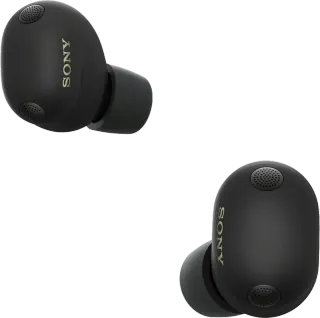
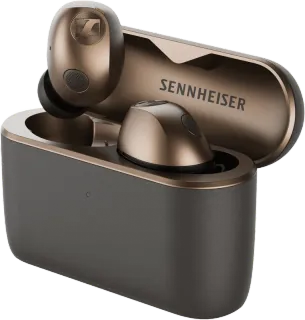
Two of 2026's most anticipated true wireless flagships are here: the Sony WF-1000XM6 and the Sennheiser MOMENTUM True Wireless 5. Both ask for a premium and both promise top-tier audio, but they take different routes to get there. This head-to-head uses only the recorded specs and scores to work out which one fits your listening habits, without inventing a winner where none exists.
Price and positioning
The Sony WF-1000XM6 costs $278, while the Sennheiser MOMENTUM True Wireless 5 costs $305. That is a $27 gap, which is small at this level but not nothing. Sony positions its earbuds as the all-rounder: strong ANC, long battery, and LDAC support for Android users. Sennheiser leans into audiophile credentials, with a broader codec list including aptX Lossless and Bluetooth 6.0, though it asks you to pay a little more for that. Neither is a budget option, so you are buying into flagship territory either way.
The scores, side by side
On the HearWiki scale, the Sony scores 87/100 and the Sennheiser scores 82/100 (rounded from 86.9 and 81.5). That is a five-point gap, which is meaningful but not enormous. The sub-scores tell a clearer story: both get 9/10 for sound, which is the headline. Sony leads on ANC (9/10 vs 8/10), battery (8/10 vs 7/10), and calls (8/10 vs 7/10). Value is tied at 7/10 for both, which is fair given the premium pricing. So the Sony wins on paper in almost every category except the sound tie, but the real question is how those differences show up in daily use.
Sound
Both earbuds are rated 9/10 for sound, so we are not going to manufacture a winner here. The Sony uses an 8.4 mm dynamic driver and supports LDAC, which gives Android users a high-resolution wireless stream. The Sennheiser uses a 7 mm dynamic driver and supports SBC, AAC, aptX, aptX Adaptive, and aptX Lossless, which covers both Android and iOS devices with high-quality codecs. In practice, the Sony is likely to sound rich and detailed, with a slight emphasis on clarity and punch. The Sennheiser is built for a more neutral, audiophile-leaning presentation, with detailed highs and deep bass. If you are on Android and want the widest codec support, the Sennheiser has the edge on paper. If you are on iPhone, both work fine with AAC, so the difference narrows. Neither is a bad choice for sound, and we would call this a draw.
Noise cancelling and battery
Sony takes the ANC crown with a 9/10 sub-score, and its adaptive noise cancellation is described as excellent. The Sennheiser scores 8/10, which is still good but not class-leading. Battery life is where the specs get tricky. Both claim 12 hours on a single charge, but the Sennheiser's summary notes that drops to 6 hours with ANC enabled. The Sony's summary does not mention a drop, and its 12-hour figure appears to hold even with ANC on. That is a significant difference for commuters or long-haul flights. The Sony also has a charging case, though its size is noted as slightly bulky. The Sennheiser's case offers a total of 40 hours with the case, but that figure is not recorded for the Sony, so we cannot compare total endurance directly. If battery life with ANC is your priority, the Sony is the clear pick.
Calls and everyday use
Call quality is another win for Sony, with an 8/10 sub-score versus Sennheiser's 7/10. The Sony's summary mentions good call clarity, while the Sennheiser does not highlight it as a strength. In everyday use, the Sony has multipoint connectivity and a robust feature set, but its stock ear tips might not fit all ear shapes. The Sennheiser has Bluetooth 6.0 and multipoint, but its touch controls are described as finicky and require a learning curve. Neither is perfect, but the Sony is likely to be more reliable out of the box for calls and general use. If you take a lot of calls in noisy environments, the Sony is the safer bet.
Which one should you buy?
If you want the best all-rounder with top-tier ANC, longer battery with ANC on, and better call quality, buy the Sony WF-1000XM6. It costs less, scores higher overall, and is the easier recommendation for most people. If you are an audiophile who values codec flexibility, especially aptX Lossless, and you are willing to accept shorter ANC battery life and a higher price, the Sennheiser MOMENTUM True Wireless 5 is a strong alternative. For sound quality alone, they are tied, so your choice should come down to ANC, battery, and calls. You can see the full spec-by-spec breakdown in our comparison table.
For more options, check our best true wireless guide or the best ANC earbuds list. If you are on a tighter budget, our best earbuds under $100 might also be worth a look.
FAQ
Which earbuds have better noise cancelling, Sony or Sennheiser?
The Sony WF-1000XM6 has better noise cancelling, scoring 9/10 versus the Sennheiser's 8/10. Sony's adaptive ANC is described as excellent, while Sennheiser's is just good. If blocking out noise is your top priority, go with Sony.
Do the Sony WF-1000XM6 support LDAC?
Yes, the Sony WF-1000XM6 supports LDAC, which is a high-resolution wireless audio codec for Android devices. The Sennheiser does not support LDAC, but it offers aptX Lossless instead, which is also high-quality. Your phone's codec support will determine which is better for you.
How long does the battery last on the Sennheiser MOMENTUM True Wireless 5?
The Sennheiser MOMENTUM True Wireless 5 lasts 12 hours on a single charge, but that drops to 6 hours with ANC enabled. The Sony WF-1000XM6 also lasts 12 hours, but its summary does not mention a drop with ANC, suggesting it holds up better. If you need long battery with ANC, choose Sony.