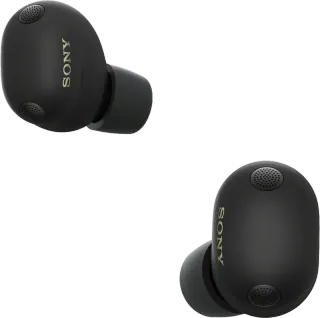
The Sony WF-1000XM6 and OnePlus Buds Pro 4 are both strong true wireless earbuds, but they sit at different price points and aim at different buyers. The Sony costs more than twice as much and packs flagship features, while the OnePlus offers most of the essentials for far less. This head-to-head works through the data we have on each, so you can decide where your money goes.
We have full product pages for the Sony WF-1000XM6 and the OnePlus Buds Pro 4, and a detailed comparison table at Sony WF-1000XM6 vs OnePlus Buds Pro 4.
Price and positioning
The Sony WF-1000XM6 costs $299. That places it firmly in the flagship tier, where you expect the best noise cancelling, the best sound, and the most complete feature set. The OnePlus Buds Pro 4 costs $130, which is less than half. That puts it in the upper budget bracket, competing with earbuds that often cut corners on ANC or build quality.
Neither price is a surprise. Sony has historically charged a premium for its WF-1000X series, and the XM6 continues that. OnePlus has always aimed for value, and the Buds Pro 4 fits that pattern. The question is not whether the Sony is better, but whether it is $169 better. For some buyers, the answer will be yes; for others, no.
The scores, side by side
Our HearWiki scores put the Sony at 88/100 and the OnePlus at 84/100. That is a four-point gap, which is real but not enormous. In practical terms, both are very good earbuds. The Sony leads on sound (9 vs 8.5) and ANC (9 vs 8), while the OnePlus counters with a higher value score (9 vs 7). Battery and calls are close: Sony scores 8 on both, OnePlus scores 8.5 on battery and 7.5 on calls.
Do not over-read the gap. A four-point difference in our scoring typically means the pricier product has a few clear advantages, but the cheaper one remains competitive in most areas. The Sony is not four times better, and the OnePlus is not a compromise purchase. If you are deciding purely on scores, the Sony wins, but the margin is thinner than the price difference suggests.
Sound
The Sony WF-1000XM6 uses a single dynamic driver and supports LDAC over Bluetooth 5.3. That combination typically delivers rich, detailed sound with strong bass and clear treble. Our sub-score for sound is 9/10, the highest in this comparison. If you listen to lossless or high-resolution audio, LDAC support matters, and the Sony is the only one of the two that has it.
The OnePlus Buds Pro 4 uses dual drivers: an 11mm woofer and a 6mm tweeter. It supports LHDC 5.0, AAC, and SBC over Bluetooth 5.4. Our sound sub-score is 8.5/10, which is close to the Sony. The dual-driver setup can produce a wide, separated soundstage, and LHDC is a capable high-resolution codec, though it is less widely supported than LDAC. If you are on a OnePlus phone, you will get the full benefit; on other Android phones, you may fall back to AAC.
In practice, the Sony has a slight edge in clarity and refinement, but the OnePlus is not far behind. If you are not an audiophile, you may struggle to tell them apart in a blind test. The bigger difference is codec support: if your phone does not support LHDC, the OnePlus loses some of its advantage.
Noise cancelling and battery
Both earbuds have active noise cancelling. The Sony scores 9/10 for ANC, which is excellent. It uses adaptive noise cancelling that adjusts to your environment, and it is among the best in the business. The OnePlus scores 8/10, which is still very good, but it is not quite at Sony's level. For flights, trains, or noisy offices, the Sony will block more sound.
Battery life is where the gap narrows. The Sony offers 24 hours of total battery life with the case, and our sub-score is 8/10. The OnePlus offers 11 hours, which is lower, but our sub-score is 8.5/10. That seems contradictory, but the OnePlus's battery life is still strong for its price, and it charges wirelessly. The Sony's 24 hours is a clear advantage, but it is also a bigger, bulkier case. If you rarely go more than a day without charging, the OnePlus will cope fine.
Neither product lists a battery figure with ANC off, so we cannot compare that. The Sony's case is larger than rivals, and the OnePlus's case is also slightly bulky, so neither wins on pocketability.
Calls and everyday use
Call quality is a mixed bag. The Sony scores 8/10 for calls, which is solid. The OnePlus scores 7.5/10, which is a little lower but still acceptable. Neither is a dedicated call earbud, but both should handle phone calls in quiet environments. In noisy conditions, the Sony will likely hold up better, but we do not have specific test data to confirm that.
For everyday use, the OnePlus has an IP55 rating, which means it resists dust and water jets. The Sony does not list an IP rating in our data, so we cannot confirm its water resistance. If you plan to use your earbuds for workouts or in the rain, the OnePlus is the safer choice. The Sony's stock ear tips may not fit all ear shapes, which is a minor annoyance, but you can replace them.
Both support multipoint connectivity, so you can pair them with two devices at once. The OnePlus has touch controls, though they may take time to learn. The Sony has customisation options, which we have noted as a strength. Neither product lists wear detection, so we cannot confirm whether they pause music when you remove them.
Which one should you buy?
If you want the best noise cancelling, the best sound, and the longest battery life, and you are willing to pay $299, buy the Sony WF-1000XM6. It is the more complete flagship earbud, and its LDAC support and adaptive ANC justify the premium for many buyers. It is also the better choice if you fly often or work in noisy environments.
If you want strong performance for $130, buy the OnePlus Buds Pro 4. It is not far behind on sound, has good ANC, a higher value score, and an IP55 rating for workouts. It is the smarter buy for most people, especially if you are not an audiophile and do not need LDAC. The four-point score gap is real, but the price gap is much larger.
For a broader view, see our best true wireless earbuds and best ANC earbuds lists. If you are on a tighter budget, our best budget earbuds under $50 and best earbuds under $100 guides are worth a look.
FAQ
Are the Sony WF-1000XM6 worth the extra money over the OnePlus Buds Pro 4?
That depends on what you value. The Sony offers better ANC, better sound, and longer battery life, but it costs $169 more. If those features matter to you, yes. If you are happy with very good rather than excellent, the OnePlus is the better value.
Which earbuds have better noise cancelling?
The Sony WF-1000XM6 has better noise cancelling, scoring 9/10 against the OnePlus's 8/10. The Sony uses adaptive ANC that adjusts to your surroundings, and it blocks more sound in noisy environments like flights and trains.
Do the OnePlus Buds Pro 4 work with iPhones?
Yes, they work with iPhones via Bluetooth, but you will not get LHDC support. On iOS, they will use AAC, which is still decent. The Sony also works with iPhones, but LDAC is not supported on iOS either, so both fall back to AAC.