Choosing between open-ear and in-ear headphones comes down to a fundamental trade-off: awareness versus immersion. Open-ear designs let you hear the world around you, while in-ear models seal you off from it. Neither format wins outright; the right choice depends on where, how, and for how long you listen.
This explainer breaks down the mechanical differences, the sound and safety trade-offs, and the practical concerns like comfort, leakage, and price. You'll find real product examples from our database to anchor the discussion.
The physical difference
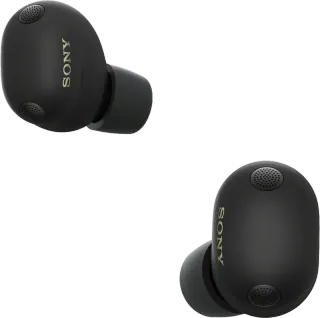
The core distinction is simple. In-ear headphones (also called true wireless earbuds) insert a nozzle into your ear canal, creating a physical seal. That seal blocks outside noise and traps sound inside, which is why they can deliver deep bass and effective noise cancellation. Examples like the Sony WF-1000XM6 and Apple AirPods Pro 3 rely on this sealed design for their signature performance.
Open-ear headphones, by contrast, sit outside the ear canal. They use either air conduction (speakers angled toward the ear) or bone conduction (vibrations through the cheekbone). The SoundPEATS UU2 (POP Clip2) and Baseus Bass BC1 Open-Ear TWS Earbuds are clip-on examples that rest on the ear without plugging it. Because nothing blocks the canal, ambient sound flows in naturally.
There is one hybrid worth noting: the Soundcore AeroFit 2 Pro can switch between open and closed fits, but its adaptive noise cancellation scores only 4/10, so it does not match dedicated in-ear ANC.
Sound: where open-ear loses
The most significant sonic difference is bass. A sealed ear canal creates pressure that reinforces low frequencies. Open-ear designs physically cannot replicate that effect. The driver sits outside the canal, so deep sub-bass rolls off quickly. The Baseus Bass BC1 gets credit for "surprisingly strong bass for open-ear style," but its 7/10 sound subscore still trails the best in-ears.
For reference, the Sony WF-1000XM6 scores 9/10 for sound and 86.9/100 overall, while the OnePlus Buds Pro 4 scores 86.6/100 with an 8.5/10 sound subscore. The best open-ear options here, the SoundPEATS UU2 and SoundPEATS Clip1 Open-Ear Clip-On Earphones, both score 7.5/10 for sound. That gap is not huge for vocals and mids, but it becomes obvious on bass-heavy tracks.
If you listen to hip-hop, electronic music, or anything with a driving low end, in-ear is the better choice. If your playlist is podcasts, acoustic music, or spoken word, the difference matters less.
Awareness and safety: where open-ear wins
Open-ear headphones shine when you need to hear your surroundings. Runners and cyclists benefit most: you hear approaching traffic, other cyclists, and pedestrians without pausing your audio. The SoundPEATS UU2's summary highlights a "comfortable, secure fit" for active use, and the Clip1's 5g weight makes it nearly unnoticeable.
In-ear models with ANC can offer a transparency mode, but it is an electronic approximation. The Apple AirPods Pro 3's transparency is among the best, yet it still colours sound slightly. For genuine, unprocessed awareness, nothing beats leaving the ear canal open.
This is also a safety issue. On a busy road, missing a car horn or an ambulance siren is dangerous. If you run or cycle in traffic, the open-ear format is the safer default. You can always switch to in-ear for focused listening later.
Comfort, leakage and the office problem
The sealed feeling of in-ear headphones bothers some people. It can cause pressure, fatigue, or simply discomfort over long sessions. Open-ear designs avoid this entirely. The Clip1's summary notes "very lightweight (5g) and comfortable clip-on fit," and the Baseus BC1 is described as comfortable for activities.
However, open-ear has a major drawback in shared spaces: sound leakage. Because nothing seals the canal, audio escapes. In a quiet office or on a bus, your music becomes audible to others. In-ear headphones leak far less, which is why they remain the polite choice for commuting and open-plan workspaces.
The Soundcore Liberty 5 Pro scores 9/10 for calls, and the AirPods Pro 3 handles calls well in noise. Open-ear models like the Baseus BC1 score 6.5/10 for calls, partly because microphones pick up more ambient noise. If you take calls in loud places, in-ear wins.
Which one should you buy?
There is no universal answer. Use this decision list:
- Buy open-ear if: you run or cycle outdoors, dislike the sealed feeling, need all-day comfort, or listen mostly to podcasts and acoustic music.
- Buy in-ear if: you want deep bass, need noise cancellation for commuting or flights, work in a shared office, or take calls in noisy environments.
- Budget matters: open-ear options like the Baseus Bass BC1 at $33 offer excellent value (8.5/10 value subscore). In-ear options like the OnePlus Buds Pro 4 at $88 also score 9/10 for value, so both formats have strong budget picks.
- Hybrid consideration: the Soundcore AeroFit 2 Pro at $180 offers flexibility, but its ANC is weak (4/10) and its 6/10 value score reflects the premium price.
For more curated picks, see our best open-ear and best true wireless lists. You can also compare specific models directly on our compare page.
FAQ
Are open-ear headphones as good as in-ear for sound quality?
Not for bass. Open-ear designs cannot produce the same deep low-end because they do not seal the ear canal. For vocals, mids, and treble, good open-ear models like the SoundPEATS UU2 come close, but in-ear models like the Sony WF-1000XM6 remain superior for bass-heavy music.
Can I use open-ear headphones in the office without disturbing others?
At moderate volumes, open-ear headphones leak noticeably. Colleagues nearby will hear your audio. In-ear headphones with a proper seal leak far less and are the better choice for shared workspaces.
Do open-ear headphones damage your hearing?
No more than in-ear headphones, provided you keep volume at safe levels. Open-ear designs do not block ambient noise, so you may be tempted to raise volume in loud environments, which can be risky. In quiet settings, both formats are equally safe when used responsibly. For more on hearing health, see our about page.
For more buying guidance, explore our best budget earbuds under $50 and best earbuds under $100 lists.
If you are still torn between a specific open-ear and in-ear model, use our compare tool to see side-by-side scores and features before you buy.