In-ear monitors, or IEMs, are wired earphones designed for accurate sound reproduction, originally built for stage musicians but now popular with anyone who wants more from their music. They differ from ordinary earbuds in how they fit, how they're built, and how they sound. This guide covers the basics you need before buying your first pair, without the jargon.
What makes an IEM an IEM
An IEM fits snugly inside your ear canal, creating a seal that blocks outside noise and anchors the driver close to your eardrum. Ordinary earbuds sit loosely in your outer ear, letting sound leak out and ambient noise in. That seal is the core difference: it gives IEMs better bass response, more detail, and far better isolation than any earbud can manage.
Most IEMs use detachable cables, so you can replace a broken wire or upgrade to a better one without throwing the whole set away. They also tend to have more robust shells, often machined metal or resin, rather than cheap plastic. If you are used to true wireless earbuds, the first thing you will notice is the cable; the second is how much more you hear in your music.
IEMs are not for everyone. If you hate the feeling of something in your ear canal, or you need noise cancellation for a noisy commute, a pair of ANC earbuds might suit you better. But if you want the most sound quality per dollar, wired IEMs are hard to beat. See our best wired IEMs list for current recommendations.
Driver types, decoded
Inside every IEM is a tiny speaker called a driver. There are four main types you will see, and each works differently.
Single dynamic driver is the most common and usually the cheapest. It is a small cone that moves air, like a miniature speaker. A well-tuned single dynamic can sound excellent, with punchy bass and a natural tone. The Etymotic ER2SE is a good example, scoring 84/100 for its neutral, accurate sound at $221.
Balanced armature (BA) drivers are smaller and more efficient, often used in multiples to cover different frequency ranges. They tend to be more detailed in the mids and treble but can sound thin on their own. Most BA-only IEMs are expensive, so budget buyers usually see them in hybrids.
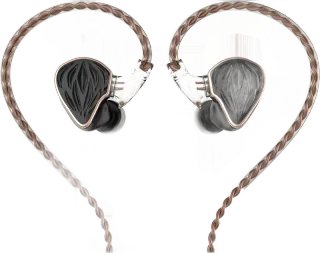
Hybrid IEMs combine dynamic and BA drivers, letting each do what it does best. The Hidizs MS3 uses one dynamic and two BA drivers, scoring 78/100 at $90. The Hidizs MS2 PRO does the same with one of each, scoring 76/100 at $79. Hybrids are a good middle ground, but they need careful tuning to avoid a disjointed sound.
Planar magnetic drivers use a flat diaphragm with magnets on both sides. They are fast and detailed, with a distinctive clarity, but they tend to be heavier and need more power. The Hidizs MP143 Salt is a rare budget planar at $109, scoring 72/100, though it may need a decent source to sound its best.
More drivers do not automatically mean better sound. A single well-tuned dynamic can beat a poorly executed six-driver hybrid. What matters is how the drivers are integrated and tuned, not how many there are. A cheap multi-driver IEM can sound messy if the crossover between drivers is rough.
Tuning is what you are actually buying
Driver type matters less than tuning. Tuning is how the manufacturer shapes the frequency response: how much bass, midrange, and treble you hear. Two IEMs with the same driver can sound completely different if tuned differently.
Many modern IEMs aim for a target curve, a frequency response that research suggests most people prefer. The Harman target is the most famous, developed by Harman International through listener testing. It is a useful reference, not a law. Some people find it too bassy, others too bright, and plenty of excellent IEMs deviate from it deliberately.
The Hidizs Mermaid MS2 is tuned to be lively and fun, scoring 72/100 at $63. The Hidizs ST2 PRO Nebula follows a professional H-2019 curve, which is close to Harman, and scores 72/100 at $33. Neither is neutral, and that is fine. You are buying a sound signature, not a measurement.
When you read reviews, pay attention to how the reviewer describes the tuning: warm, bright, neutral, V-shaped, bassy. That tells you more than any spec sheet. If you can, listen before you buy, or at least buy from a retailer with a good return policy.
Tips and seal: the cheapest upgrade there is
The single most important factor in how an IEM sounds is the fit. If the ear tips do not seal properly, you lose bass, detail, and isolation. A $200 IEM with a bad seal sounds worse than a $30 IEM with a perfect one.
Most IEMs come with several sizes of silicone tips, and some include foam tips. Silicone tips are durable and easy to clean; foam tips expand to fill your ear canal and often give a better seal. Try every size and material that comes in the box. If none work well, aftermarket tips are cheap and can transform the sound.
Push the IEM in gently until it feels snug, then twist slightly to seat it. You should hear a noticeable drop in ambient noise. If you hear your own footsteps or a hollow sound, the seal is not right. Getting the fit right is the best upgrade you can make, and it costs nothing.
Do you need an amp?
For most modern IEMs, no. Most are designed to be driven easily by a phone, laptop, or dongle. The Hidizs MP143 Salt is an exception, as planar drivers can be power-hungry, but even it will play at reasonable volume from a phone.
If your source has a noisy headphone jack, or you want more headroom for EQ, a cheap USB dongle DAC can help. You do not need a desktop amp for IEMs unless you are also driving full-size headphones. Start with what you have, and only add gear if you hear a problem.
Where to start
If you are new to IEMs, start cheap. The Hidizs ST2 PRO Nebula at $33 is a low-risk entry point, scoring 72/100. The Hidizs Mermaid MS2 at $63 offers a bit more refinement, also scoring 72/100. Both are good first pairs.
If you want a step up, the Hidizs MS2 PRO at $79 scores 76/100, and the Hidizs MS3 at $90 scores 78/100 with interchangeable tuning filters. These give you a taste of what hybrid IEMs can do without breaking the bank.
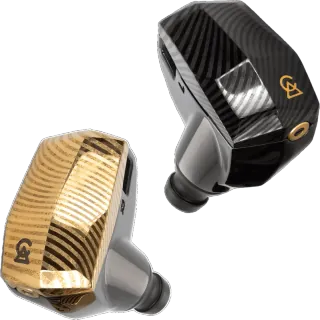
Diminishing returns hit hard above $100. The Etymotic ER2SE at $221 scores 84/100, which is only six points higher than the $90 MS3. At the top end, the Campfire Audio Andromeda 10 Launch Edition costs $2499 and scores 88/100. You are paying for build quality, exclusivity, and marginal gains, not a night-and-day difference.
Burn-in, the idea that headphones improve with use over time, is mostly scepticism. Some drivers do settle slightly, but the effect is small and usually masked by your brain getting used to the sound. Do not buy an IEM expecting it to transform after 100 hours. If it sounds bad on day one, it will probably still sound bad on day 100.
Browse our IEM database to compare specs and scores, and check the best wired IEMs page for curated picks. Start with a budget pair, get the fit right, and learn what you like before spending more.
FAQ
What is the difference between IEMs and earbuds?
IEMs fit inside your ear canal and create a seal, which gives better bass, detail, and noise isolation. Earbuds sit in your outer ear and let sound leak in and out. IEMs also usually have detachable cables and more robust builds.
Do I need an amplifier for IEMs?
Usually not. Most modern IEMs are sensitive enough to run from a phone or laptop. Planar models like the Hidizs MP143 Salt may benefit from a stronger source, but you can start without one and add a DAC later if needed.
How much should I spend on my first IEM?
Start under $50. The Hidizs ST2 PRO Nebula at $33 is a great first pair. If you enjoy it, move up to the $80-100 range for hybrids like the Hidizs MS2 PRO or MS3. Diminishing returns mean you do not need to spend hundreds to get good sound.
What are the best ear tips for IEMs?
Silicone tips are durable and come in many sizes; foam tips expand for a tighter seal. Try all the included tips first, and if none fit well, aftermarket options from brands like SpinFit or Comply are cheap and can dramatically improve comfort and sound.