If you are shopping without a budget cap, the true wireless market still demands careful choices. The best earbuds are not simply the most expensive ones; they are the ones that balance noise cancellation, sound, battery, and fit in a way that suits how you actually listen. This guide ranks the highest-scoring models in the HearWiki database, so you can see at a glance which flagship earbuds earn their price and which ones cut corners.
We have ranked eight models by their overall eardb_score, then taken a closer look at the top six. Scores reflect a weighted average of sound, ANC, battery, calls, and value, rounded to a whole number. Prices are the current recorded list prices in the database. If a spec is not recorded, we say so rather than guessing.
The shortlist
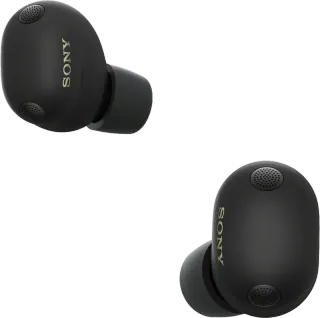
Sony WF-1000XM6
Sony WF-1000XM6 scores 88/100 and costs $298. This is the current flagship from Sony, and it shows in the details: the adaptive noise cancellation is among the best you can buy, and the sound is rich and detailed with LDAC support for high-resolution streaming. Battery life is a strong 12 hours with ANC on, and multipoint connectivity works reliably. The main weakness is the price, which is higher than the previous generation, and the charging case is noticeably bulkier than rivals. If you want the best all-rounder and do not mind the size, this is the one.
Sony WF-1000XM5
Sony WF-1000XM5 also scores 88/100 but costs $249, making it the smarter buy for most people. It offers the same excellent adaptive noise cancellation and LDAC support, with a slightly more compact fit than the XM6. Battery life is identical at 12 hours without ANC, and the IPX4 rating covers workouts. The weakness is that it is now two generations old, so you miss the newer case design and any refinements Sony has made since. At the current price, though, it delivers nearly everything the XM6 does for $50 less.
OnePlus Buds Pro 4
OnePlus Buds Pro 4 scores 84/100 and costs $130. This is the value pick of the group, offering dual-driver sound with LHDC support, effective adaptive ANC, and a long 13-hour battery life. The IP55 rating makes it more workout-friendly than most flagships, and wireless charging is included. The weakness is the touch controls, which take some getting used to, and the case is a little bulky. If you want flagship-level features without the flagship price, this is the strongest option.
Huawei FreeBuds Pro 2
Huawei FreeBuds Pro 2 scores 84/100 and costs $329. The dual-driver setup, an 11mm dynamic driver paired with a planar diaphragm, delivers impressive clarity and a wide frequency response. Adaptive ANC and LDAC support round out a feature-rich package. The weakness is battery life: only 6.5 hours per charge, dropping to around 4 hours with ANC on. The charging case brings total playback to 18 hours with noise cancellation, which is below the competition. This is a niche pick for audio purists who prioritise driver design over endurance.
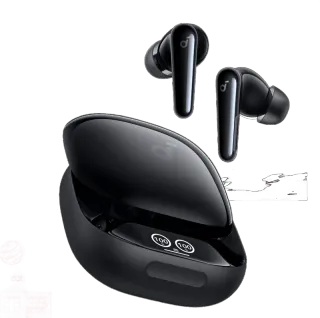
Soundcore Liberty 4 Pro
Soundcore Liberty 4 Pro scores 84/100 and costs $150. It packs adaptive ANC, LDAC support, multipoint, and wireless charging into a budget-friendly package. Sound is solid with crisp treble, and call quality is reliable. The weakness is the charging case, which feels gimmicky and smudges easily, and spatial audio is weak. Battery life is average at 10 hours. This is a well-rounded value pick rather than a flagship-level performer, but it is hard to argue with the price.
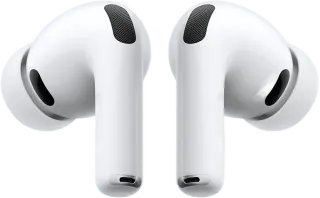
Apple AirPods Pro 3
Apple AirPods Pro 3 scores 84/100 and costs $232. The noise cancellation is the best in this list, scoring 9.5/10, and call quality is excellent even in noisy environments. The sound profile is well-balanced, and the IP57 rating is the highest here. The weakness is the fit, which can be finicky and lose its seal easily, and it only supports AAC, so Android users miss out on high-resolution codecs. For iPhone owners, this is the most polished option; for everyone else, look elsewhere.
Soundcore Liberty 5 Pro
Soundcore Liberty 5 Pro scores 84/100 and costs $170. It excels in voice-call quality with a 10-mic setup, and the wool-paper diaphragm drivers produce a warm, detailed sound. Adaptive ANC and LDAC support are included, and the fit is comfortable for long sessions. The weakness is battery life per charge, which is only 6.5 hours, and there is no wear detection for auto-pause. This is a strong mid-range option if calls matter more than endurance.
Sony WF-1000XM4
Sony WF-1000XM4 scores 84/100 and costs $199. The previous flagship still holds up well, with excellent ANC and detailed LDAC sound from a 6mm driver. Battery life is 12 hours without ANC, and fast charging is handy. The weakness is the bulkier fit, no wireless charging on the case, and touch controls that can be finicky. At $199, it is a good deal if you find it, but the newer models improve on the fit and case.
Flagship earbuds: what you are actually paying for
When you move past the $150 mark, the improvements become incremental. Here is what the extra money buys you, and where the returns diminish.
ANC depth. The difference between the top-tier ANC in the Sony WF-1000XM6 and the solid ANC in the OnePlus Buds Pro 4 is real but subtle. Both will silence an aeroplane cabin or a busy office. The Sony and Apple models handle sudden noises like a door slamming more gracefully, but you need to be in a very noisy environment to notice. If you work from home, the cheaper models are likely enough.
Call quality. Microphone arrays have improved across the board. The Soundcore Liberty 5 Pro uses ten mics for calls, and the Apple AirPods Pro 3 handles windy streets well. The older Sony WF-1000XM4 scores lower on calls, so if you take calls daily, check the call subscore before buying. This is one area where paying more does make a tangible difference.
Codec support. LDAC and LHDC offer higher bitrates than AAC, but only if your phone supports them. Android users benefit from LDAC on the Sony and Soundcore models; iPhone users are limited to AAC regardless of what the earbuds support. The Apple AirPods Pro 3 only supports AAC, which is fine for iOS but a limitation on Android. Do not pay extra for LDAC if your phone cannot use it.
Ecosystem lock-in. The Apple AirPods Pro 3 integrate seamlessly with iOS, with features like automatic device switching and spatial audio. Sony and Soundcore offer companion apps with EQ and controls, but they do not tie into a wider ecosystem. If you are all-in on Apple, the AirPods are the obvious choice; otherwise, the cross-platform options give you more flexibility.
Diminishing returns. The jump from $130 to $250 is noticeable in build quality and ANC refinement. The jump from $250 to $330 is much smaller. The Huawei FreeBuds Pro 2 costs more than the Sony WF-1000XM6 but offers less battery life and a less polished app. Unless you have a specific reason, the sweet spot is between $150 and $250.
How we picked
We started with every true wireless earbud in the HearWiki database and filtered for models with a recorded buyability score. That score combines consensus from published third-party reviews with price/value and current availability; it is not a weighted average of the category subscores. We excluded models with missing scores or incomplete data. The eight models listed here are the highest-scoring true wireless earbuds in the database, in rank order. For the detailed breakdown, we focused on the top six.
For more options, browse our best true wireless page, or use the compare tool to pit two models against each other side by side.
FAQ
Which true wireless earbuds have the best noise cancellation?
The Apple AirPods Pro 3 has the highest ANC subscore in this list at 9.5/10, followed by the Sony WF-1000XM6 at 9.0/10. The half-point difference is small, so ecosystem and fit may matter more to a buyer. Both are excellent, and the choice comes down to your phone ecosystem.
Are expensive earbuds worth it over budget models?
Up to around $250, yes, you get noticeably better ANC, call quality, and build materials. Beyond that, the gains are small. The OnePlus Buds Pro 4 at $130 offers 80% of the experience of the Sony WF-1000XM6 at $298. If you are on Android and do not need the absolute best ANC, the OnePlus is the smarter buy.
What is the best battery life in a true wireless earbud?
The OnePlus Buds Pro 4 leads with 13 hours per charge, followed by the Sony WF-1000XM6 and WF-1000XM5 at 12 hours. The Huawei FreeBuds Pro 2 is the weakest at 6.5 hours, so if you travel long-haul, avoid it. Note that these figures are with ANC off; expect roughly a third less with ANC enabled.